Greek Goddess Lyssa – Rage Personified
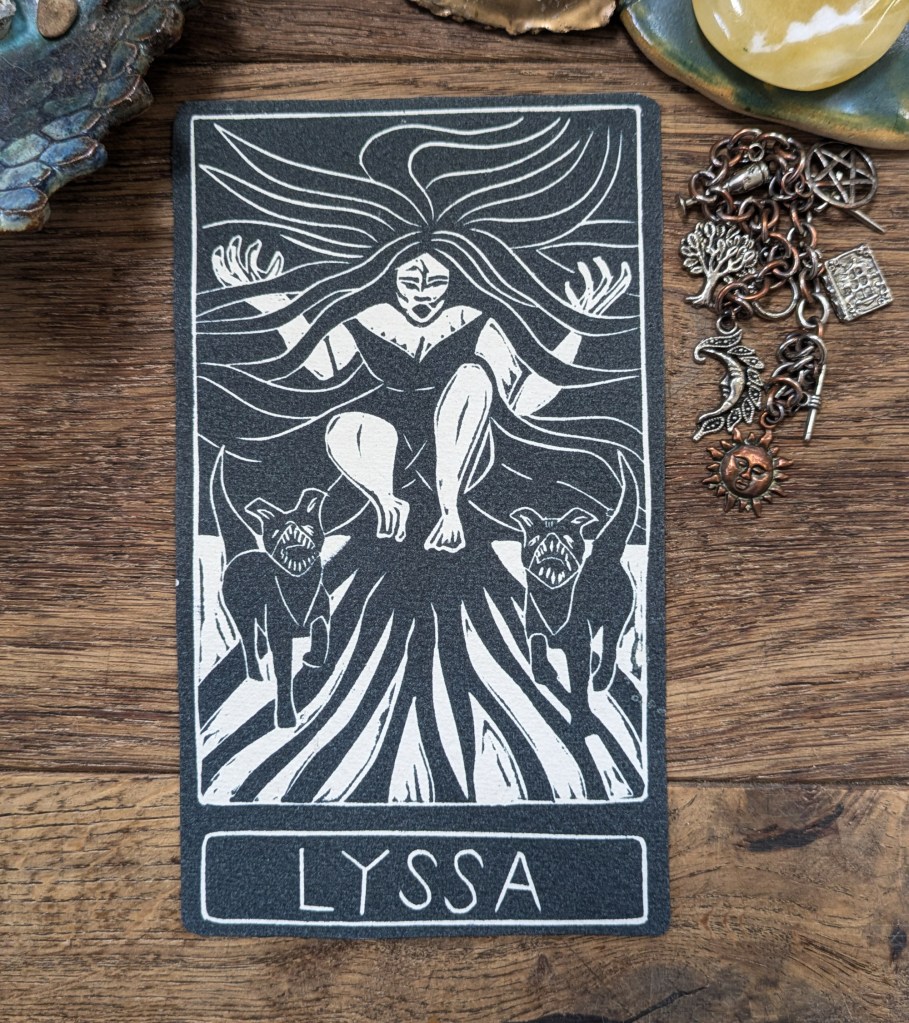
Greek Goddess Lyssa is the personified spirit, or Daimon of rage and fury. She can drive animals to madness with rabies, setting them on her targets and was often used as weapon, as the divine response to injustice, betrayal, and the violation of natural order. When mortals committed acts that demanded cosmic retribution, it was often Lyssa who arrived.


Myths surrounding Lyssa
Heracles and the Madness
Hera was jealous of her husband Zeus’s son Heracles and wanted to destroy him. She asked Lyssa to drive the hero mad. But Lyssa hesitated as she knew Heracles was a good man who had helped both gods and humans.
The Daughters of Proetus
King Proetus had three daughters who became extremely vain and claimed they were more beautiful than the goddess Hera. Lyssa punished their arrogance by driving them mad, making them wander the countryside believing they were cows. They were only cured when they properly honored the gods and showed humility.
The Death of Pentheus
King Pentheus of Thebes refused to acknowledge Dionysus as a god and banned his worship. Lyssa worked with Dionysus to punish this disrespect by driving all the women of Thebes into a religious frenzy. In their madness, they killed Pentheus—including his own mother, who didn’t recognize him.
The Death of Actaeon
The hunter Actaeon watched the goddess Artemis bathing naked in a lake. Furious at being seen, Artemis turned him into a stag. Lyssa then drove his own hunting dogs mad with rabies, and they tore their former master apart, not recognizing him in his new form.
The Madness of Ajax
After the Trojan War, the Greek hero Ajax felt he deserved Achilles’ armor but it was given to Odysseus instead. In his rage and humiliation, Lyssa afflicted him with madness. Ajax slaughtered a flock of sheep thinking they were his enemies, and when he realized what he’d done, he killed himself in shame.
Goddess Lyssa guidance in today’s world.
Lyssa embodies the raw force of feminine rage, and though her energy in terrifying, it can also hold immense potential for positive change in the world.
Society dismisses women’s anger as “hysteria” or being “too emotional.” But Lyssa shows us that feminine rage can be sacred and necessary. Throughout history, women’s anger has driven major social changes—from suffragettes fighting for the vote to #MeToo exposing abuse.
Feminine rage isn’t something to suppress or apologize for. Like Lyssa’s divine fury, it often signals real injustice and can be the catalyst for positive change. The problem isn’t women’s anger—it’s the systems that try to silence it.
Sometimes rage is exactly what the situation calls for.
Feminine rage is the fire ignited in your belly by social injustice, by the indignities and cruelties inflicted upon so many. It is the heartbreak for the path humanity is on.
Girls are often taught to suppress their rage, even when disrespected, expected to just let it go. Yet when harnessed and unleashed, it becomes a catalyst for change.
 The Goddess Directory
Leave a comment