• Ancient faery queen of Britain

    The Queen of Elphame is an ancient fairy queen renown on the border of England and Scotland. There are many an old folktale in the British Isles describing a woman by the side of the road. Sometimes she is a fine white lady upon a horse or desperately beautiful seductress, and sometimes she is a decrepit old lady in need of help. However she appears to the traveler, she is there for one reason alone, and that is to whisk the human off to the realm of the fairies. One of the most well known tales of the Queen of Elphame is of Thomas Rhymer.

    ‘I’m not the Queen of Heaven, Thomas,
    That name does not belong to me;
    I am but the Queen of fair Elphame
    Come out to hunt in my follie.

    Thomas Rhymer by Robert Graves

    The tale of Thomas Rhymer

    Thomas the Rhymer, lived in the 13th Century and was a Scottish laird. This much we know for fact. The story goes that one day Thomas fell asleep under the Eildon tree. When he awoke, his eyes fell upon a beautiful lady dressed in green riding a white horse. She leaned down to him and kissed him. He was enchanted by her beauty and followed her to the elven realm. He spent seven years in the Land of the Elves and came back a changed man. He had the power of prophecy and was gifted with awen – poetic inspiration. And then after seven years he disappeared once again. This historical man, and the stories of his powers became the starting point for many similar tales all across the country, such as the story of Tam Lin. The Queen of Elphame appeared in them all. Sometimes she was a kind and good elven queen and sometimes she was malevolent. Perhaps has with most fairies, she was both these things.
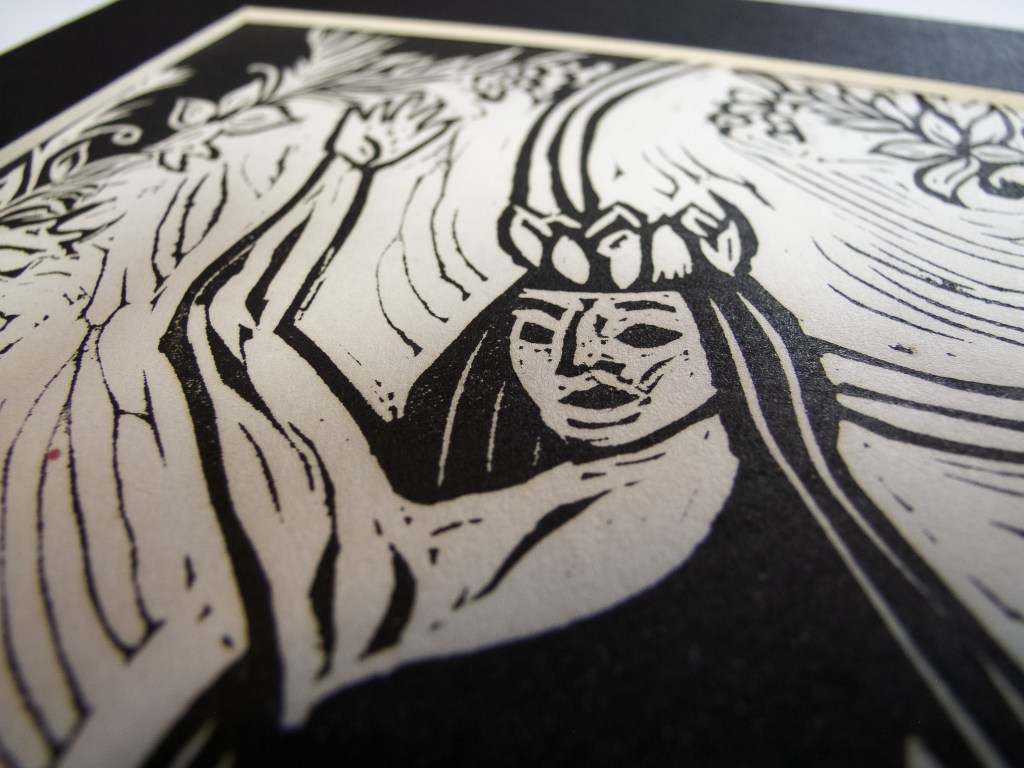
    Another interesting fact regarding the Queen of Elphame is that she was mentioned throughout the Scottish witch trials. She was described has a devil type figure who would lead the women astray and cause them to do all kinds of evil things. She was not only the Queen of the fairy realm it seems but also the queen of the witches.

    The Queen of Elphame, hand printed original linocut is available to buy here and also a greeting card

    Back with more goddesses soon, bye!

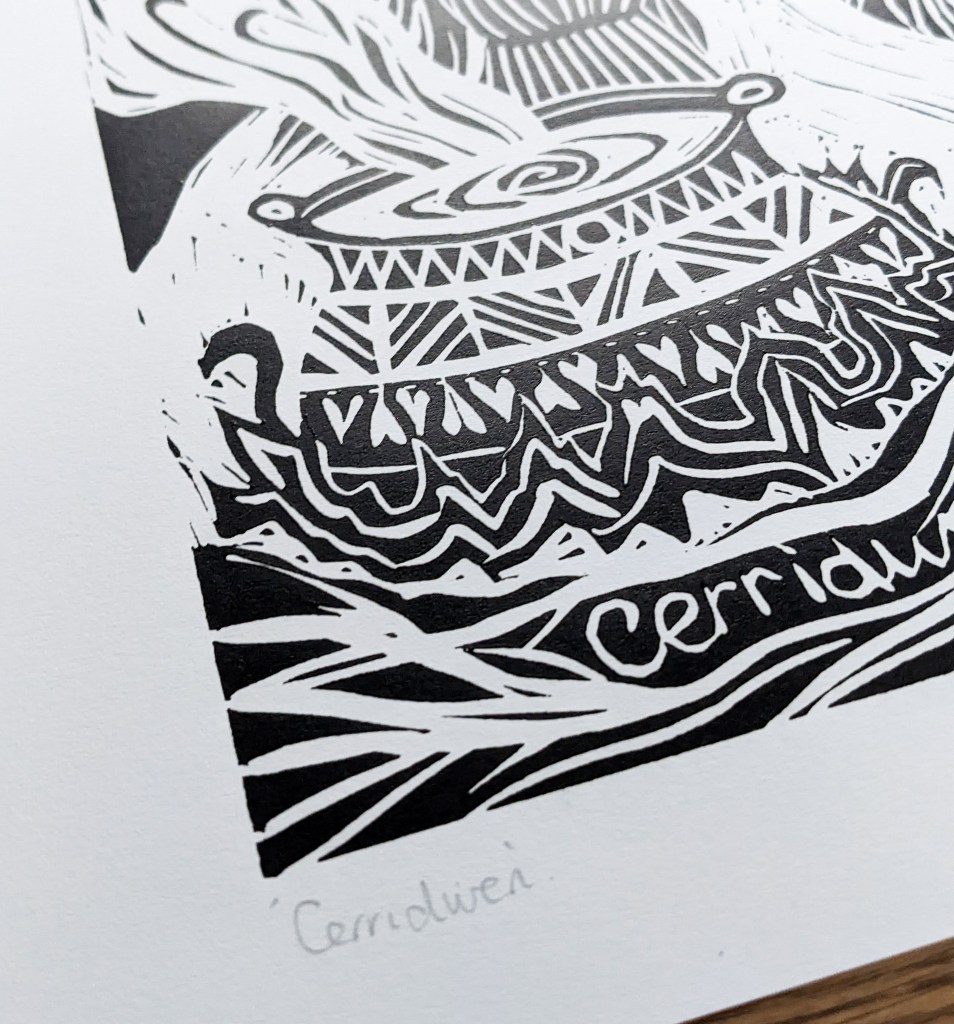
  • Dearest Cerridwen : Goddess, white witch, enchantress. She has been called all of them.

    Let us begin with the Mythology. The story of Cerridwen and Talesin the Bard. This is a story of a mother love, an enchantress’ wrath and the death and rebirth of a hero.

    Cerridwen had two children, her daughter was beautiful and full of light and her son Morfran was hideous and dull witted. Cerridwen was worried for her son, believing he would not be accepted in to high society the way that he was, so she decided to use her cauldron to help him. She set about brewing him the potion of Awen – poetic wisdom, inspiration and knowledge.

    The potion she would brew would take a full year to make and so set her servant Morda to stoke the fire and his apprentice Gwion to stir the brew whilst she gathered herbs. On the final day Gwion stirred the potion a little too hard and 3 drops of potion flew from the cauldron and landed on the boys hand. Without thinking the boy popped his thumb in his mouth to quell the burning and in that moment all the knowledge of the world flew through him. He realised the wrath he would face from Cerridwen for having stolen her son’s future and so he ran. When Cerridwen returned she was furious and so the imfamous chase began.

    Gwion Bach with his new powers transformed himself into a hare and ran like the wind. Cerridwen seeing this transformed in to a greyhound and pursued swiftly, Gwion ran to the river, diving in he shapeshifted into a fish but Cerridwenn close behind became an otter to out swim him. Gwion then shifting into a bird flew into the sky but Cerridwen leapt out of the river and transformed into a hawk chasing him down. Closer now, Gwion began to panic, when he saw a barn of wheat. He quickly transformed into one of many grains of wheat believing he could hide. Cerridwen saw what he had done and shapeshifted in a hen, she scratched through the grains until she found him and swallowed him up.

    Now this seed inside of Cerridwen grew and she soon realised that Gwion was to be reborn through her as her son. When she held him in her arms nine months later, her anger had dissipated but she could not keep the child, beautiful though he was. She decided to cast him out and let the fates decide if he should live. She wrapped him in a leather bag, and with a pray and a blessing through him to the sea. And so begins the story of all great heros. Gwion once rescued became talesin and the tales regarding his intelligence and foresight and his beautiful poetry are legendary.

    Cerridwen’s Attributes

    Inspiration

    As mentioned in the above story, one of Cerridwen many names is the Keeper of Cauldron. She used this cauldron for good, to help others and to provide answers. The timing of her story is placed around the Arthurian legends and often the Cauldron of Awen and Holy Grail are surmised to be one and the same. Awen is a welsh word for ‘inspiration, especially creative inspiration, poetic wisdom and when personified Awen is the muse. So as the Keeper of this cauldron, Cerridwen is a powerful source of guidance in all things creative and can be called upon to help you find your creative inspiration.

    Transformation

    Another of Cerridwen’s gifts is of transformation. She is a shapeshifter and a powerful enchantress and has the ability to help others change. In the story above we see her change Gwion life dramatically, from a servant to the most famous bard in all the land. The fire of transformation may be difficult but rebirths always are. If you get stuck and lost Cerridwen is certainly a goddess who can aid you in finding your new path.

    Rebirth and the cycle of life and death.

    One of the most important themes Cerridwen’s story gives us is that of life and death. Everything in our life is in a cycle, things go and come around again, changed and transformed. The chase represents the changing seasons around us and also the need for change in ourselves. Something must die for it to be reborn. Gwion died and was reborn as Talesin. Cerridwen herself transformed from vengeful sorceress to a mother at peace with her fate. They both suffered but came out the other side with true knowledge and inspiration.

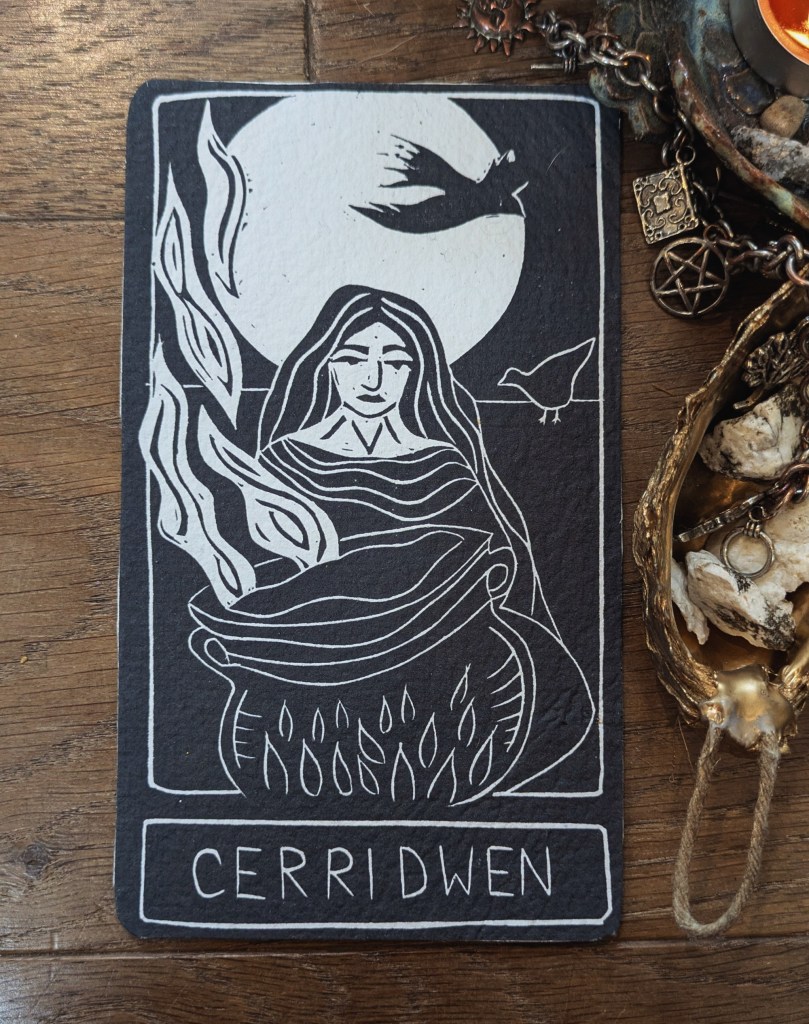
    Cerridwen oracle card

    CERRIDWEN
    The great goddess Cerridwen was an enchantress, sorceress and witch. She was the sacred keeper of the Cauldron of Awen.
    Awen is the welsh word for creative inspiration and poetic wisdom. With her powerful magic she possessed the power of prophesy, transfiguration and spell working.
    Cerridwen is the great mother goddess of change, of life and death and rebirth. She is the goddess of memory and time and magick.
    Call to Cerridwen when you are stuck, stagnant and feel the need to move on and transform but don’t know where to start.
    Like the changing of the seasons everything around us comes and goes. Change is essential.
    Call to Cerridwen to seek the knowledge and inspiration needed for your rebirth and she will show you the way forward.

    The Coventina Press

    All artwork is available over at The Coventina Press

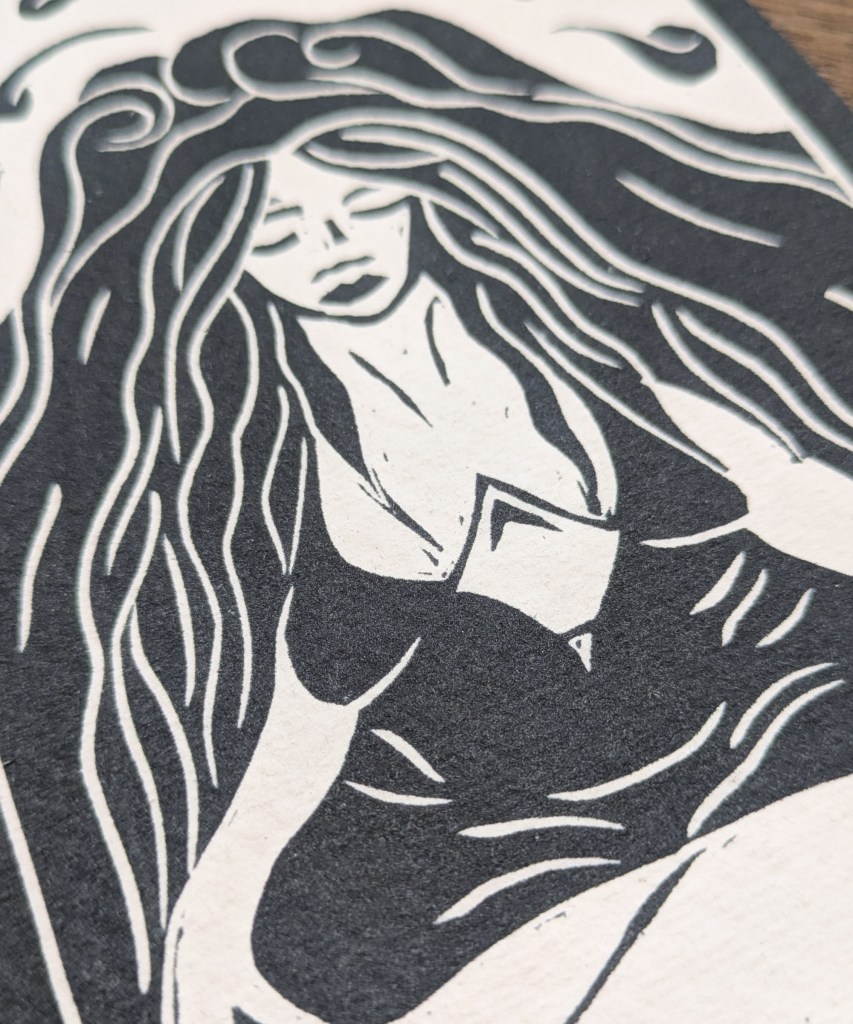
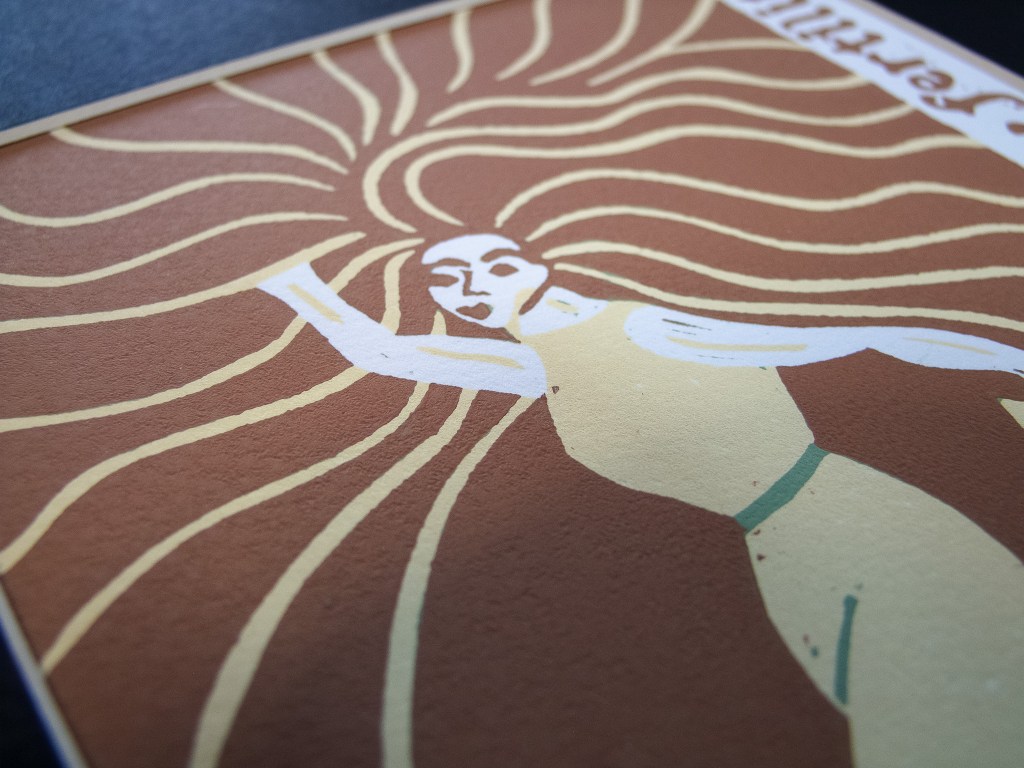
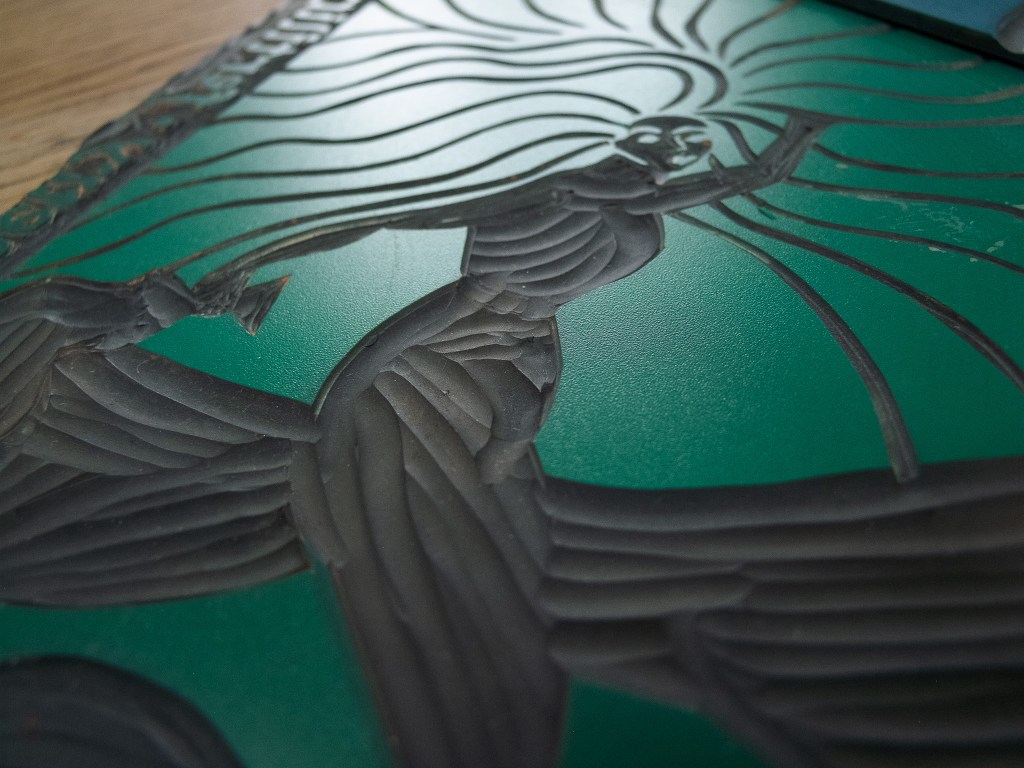
    Cerridwen linocut print and greeting card

    Cerridwen Oracle card

    Cerridwen Miniature eraser print

  • Pele

    Pele: The Fiery Goddess of Hawaiian Mythology

    Dearest Pele,

    Wild fiery daughter of Haumea, Mother of the Earth and Wakea, Father of the Sky. Pele is a most beloved Hawaiian deity. The legends of her are vast and would be impossible to capture in such a short post as this one. So I will tell just one story. A story of passion and pain.

    Pele and Lohiau

    Pele, goddess of volcanoes, fire and lightning was sent away from her home. She set off for an adventure in a canoe, carrying with her, her little sister, Hi’iaka in the shape of an egg. The ocean was so vast and the journey so long that when they finally arrived at the islands of Hawaii her little sister was already grown. Pele made the volcanoes and her sister danced among the flowers and groves and they were happy. Pele often traveled in spirit form to the many islands of Hawaii and on one visit met a mortal man called Lohiau and fell deeply in love with him. She spent as long as she could with him but eventually needed to return to her body and missing him desperately she begged her sister to travel to him and bring him to her. Pele, aware of her sisters beauty made her sister promise not to fall in love with him and to return within 40 days. Hi’iaka in return asked only that she care for her friend Hopoe and her groves.

    Hi’iaka’s journey to find Lohiau was a difficult one. Winds and rains lashed at her canoe and the journey took many weeks. When she finally arrived at the island, she found that Lohiau had died of a broken heart. Using all of her power Hi’iaka brought Lohiau back from death and asked if he would travel with her to Pele and he agreed. As they approached Hi’iaka realised that she had taken too long and 40 days had been and gone.

    Pele all alone on the island had begun to rage, she believed her sister had betrayed her and had kept Lohiau for herself and in her fury she exploded with Lava. It flowed down through the beautiful groves, killing everything in its path, including Hi’iaka’s best friend. Hi’iaka on her approach saw what Pele had done and sobbed in pain. Lohiau wrapped his arms around her to comfort her and Pele saw the pair and knew she had been forsaken. She sent all her might against the little boat, swirling it in the sea, surrounding it in a towering inferno but little Hi’iaka fought against her and the pair escaped to a different island. Eventually Lohiua and Hi’aka did fall in love and they spread their love of flowers and dance to all the islands in the tradition of Hula. Goddess Pele, passionate and impatient, stayed in her volcano, erupting every so often to remind the world of her power and her pain.

    This is just one story of Pele and just one aspect of her personality but it is a great story to describe the element of fire and the fire archetypes within us. Passion is a powerful thing but a fire that burns too bright will consume you, and quite possibly everything you love as well.

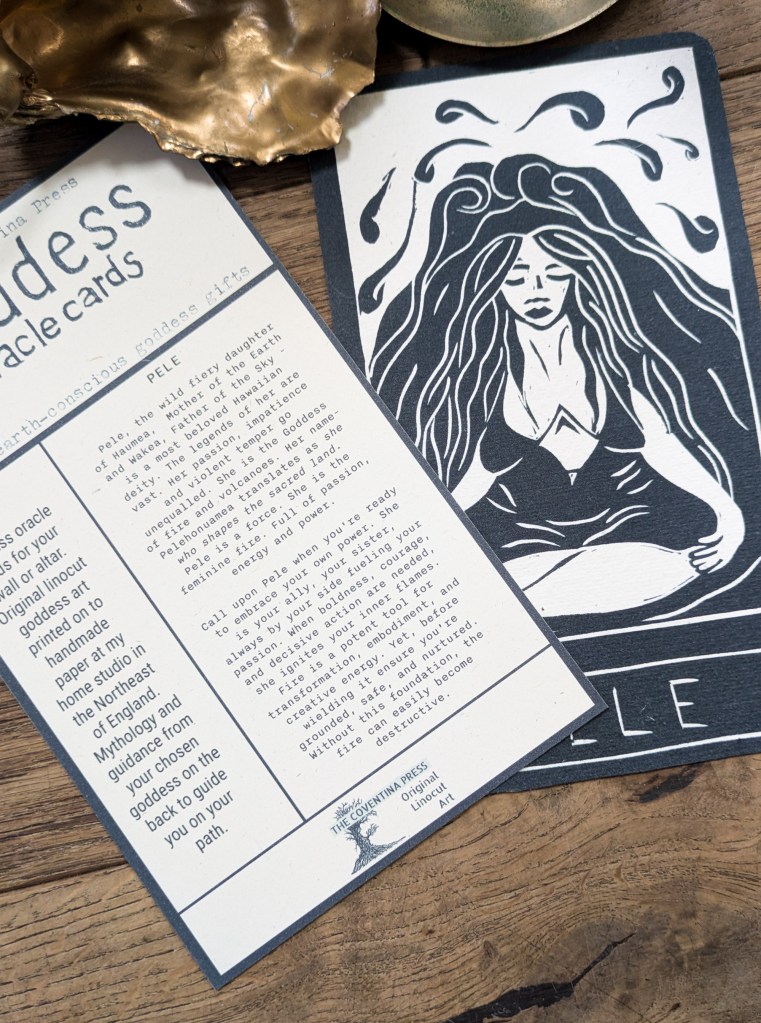
    Pele oracle card

    Find Goddess Pele art over at The Coventina Press.

    Pele Linocut

    Pele greeting card

  • Brigid: Protectress of Justice and Inspiration

    Dearest Brigid, who can be summoned with many names. Brighid, Bride, Bridey, Brigit, Brigantia or even Saint Brigid of Kildare. Goddess of fire and flame, possibly the most powerful and well known of all the Celtic pantheon. Her mythology takes many paths and over the centuries has changed as different stories become enmeshed with each other. Her many faces through time are often contradictory but show a fascinating web of connectedness.

    Attributes of Goddess Brigid

    Brigid is associated with the element of fire, in all its aspects and glory. The many facets of this element and how it interacts in our inner and outer worlds.

    As the Goddess of inspiration she is the fire inside of us all. Our inspiration, poetry and vital energy; the force that moves us forward towards our goals. Our inspired wisdom and skill, all stem from this fire within, and Brigid is the goddess who tends it.

    As the Goddess of smith-craft and healing , she gives the ability to mold fire and bend the element to our will.

    Smith-craft as always been associated with magick and the supernatural, and blacksmiths were held in high regard throughout the Celtic world as were the healers and their skill and ability to save those around them.

    As Goddess of the forge, she oversees justice, law and order, and the attribution of punishment. She protects the rights of women and upholds the peace as a warrior with her fiery arrow and offers strength and protection to any who fight for justice.

    But perhaps the most important aspect and certainly the most well known is of Brigid who brings the Sun.

    Brigid and the festival of Imbolc

    The festival of Imbolc has been celebrated for centuries. It was especially important in the budding agricultural world of the Celts; where a long winter could mean death and starvation. Imbolc is celebrated on the first days of February, half way between the winter solstice and the spring equinox. The animals would begin to calve and the mothers milk would begin to flow. As the Crone releases her grip on the Earth, the plants would begin to grow once more. The celebration of life returning and of Spring on its way is the celebration of Brigid; as the maiden arriving and as the great mother welcoming it in.

    This festival day is still celebrated throughout the Celtic world today and is also celebrated as Candlemas in the Christian world. Our Goddess Brigid became St Brigid of Kildare, patroness of Ireland and the Mother of Saints. A fire was kept burning in her honour for hundreds of years at her convent in Kildare.

    Whichever way you choose to honour her; as Goddess or Saint, Brigid is the fire that burns within us, the fire in our hearths and the fiery sun in the sky. She will forever bring you light and warmth on your journey if you but let her in,

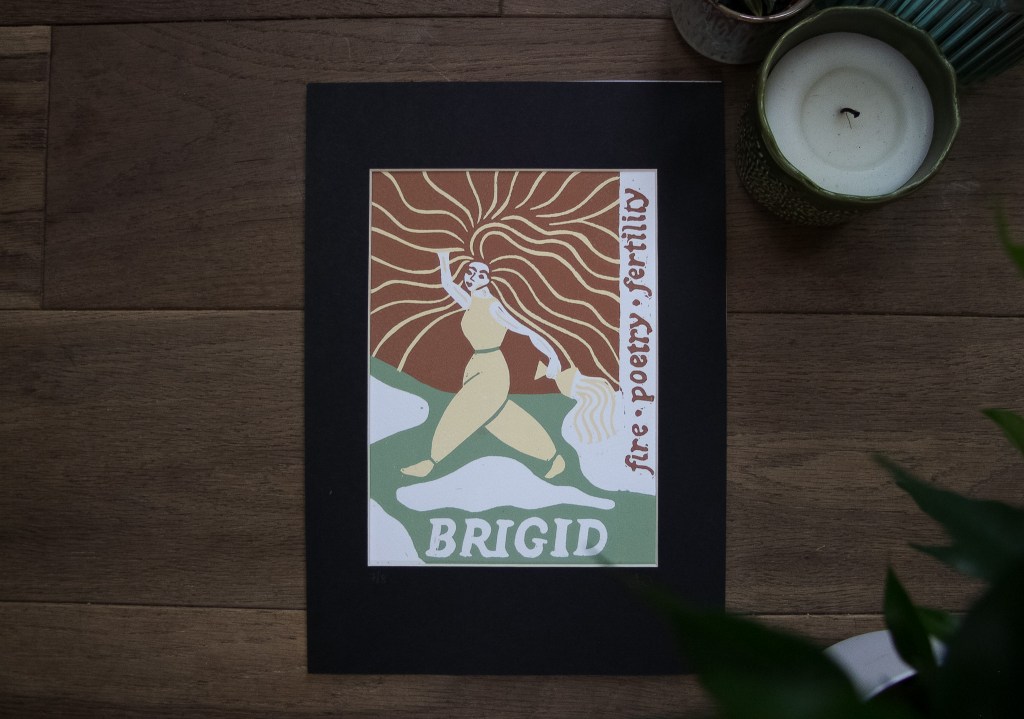
    The Brigid limited edition linocut is available to buy here and as a greeting card here

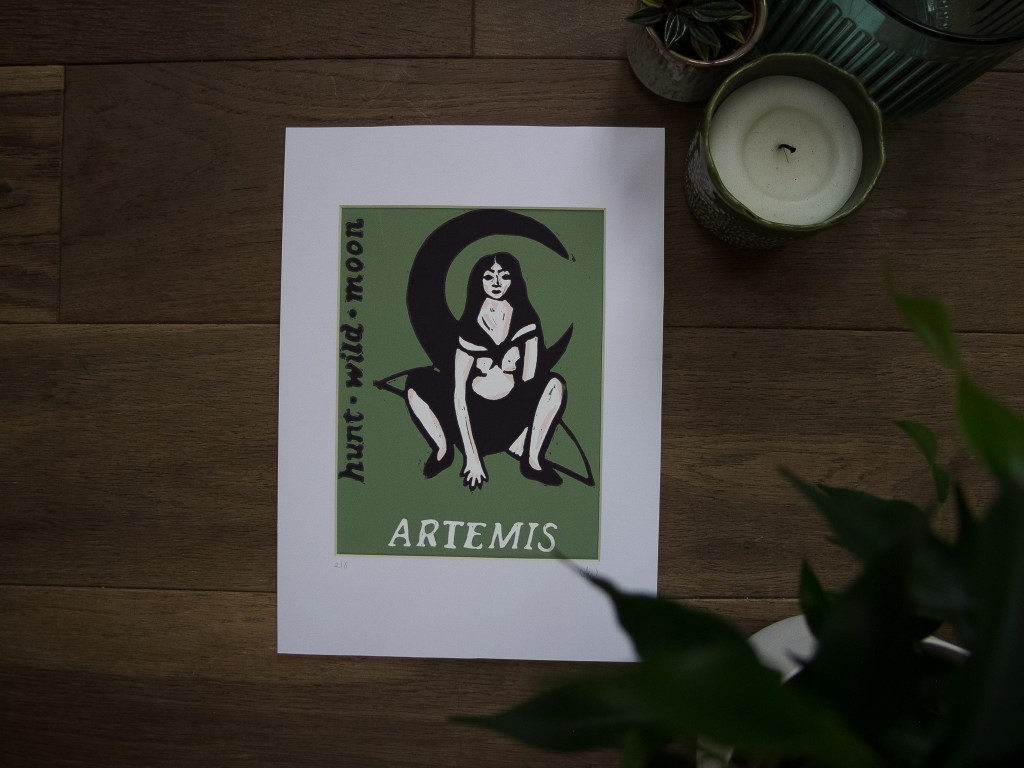
  • Artemis: The Fierce Goddess of Independence and Strength

    Dearest Artemis, steadfast and strong, intelligent and brave, fierce and loyal.

    Goddess of Childbirth

    Artemis’ mother Leto struggled to give birth to her twins because of Hera. In a jealous rage Hera refused to let her daughter, the then goddess of childbirth help Leto. She had made it impossible for Leto to find a safe space to have children. Artemis was eventually born first after much struggle and then helped her mother to give birth to her twin Apollo, taking the new mantle of Goddess of childbirth and midwifery.

    Goddess of Wilderness

    Artemis felt most at home in the wild, roaming the mountains and forests and being at peace with the animals that lived there. She never tried to harness or use nature for any purpose. She protected the wild and the animals from the outside world. Her and her companions would bath in the rivers and rest in peace from the hostility of the world around them.

    Goddess of the Hunt

    Artemis’ aim was always true. Her ability, skill and determination was legendary.

    Her fierce and loyal nature often brought her into confrontations with others who she felt had wronged her, her companions or her home and she never flickered in her attribution of punishment. She was ferocious in her revenge.

    Goddess of the Moon

    Often associated with the crescent or new moon. She illuminates the path for others, she will bring light in to your world and lead you through your hardest moments.

    Learning from Artemis

    At the tender age of 3, Artemis asked Zeus for 6 wishes. which he granted.

    -to be live without marriage or love

    -a bow and arrow

    -a hunting costume and the freedom from women’s clothes

    -the job of bringing light into the world

    -60 companions for her hunt

    -and all the mountains on Earth to live on,

    These requests gave her freedom to be her authentic self and to live the life she craved. It was this authenticity that made her the feminist icon she is today. She fully accepted herself, never let anyone keep her down and she always protected those around her.

    As a human assigned female at birth, I was conditioned to always put others first, to not stand up for myself, to not be too loud, or too fierce, or too strong.

    I’m fighting it now, I’m searching for my authentic self and I picture Artemis, in her defiance, in her total independence and her confidence and I see her walk besides me with her bow and arrow and her light. She is my companion and she always has my back.

    Available Artemis designs in my shop are linked below!

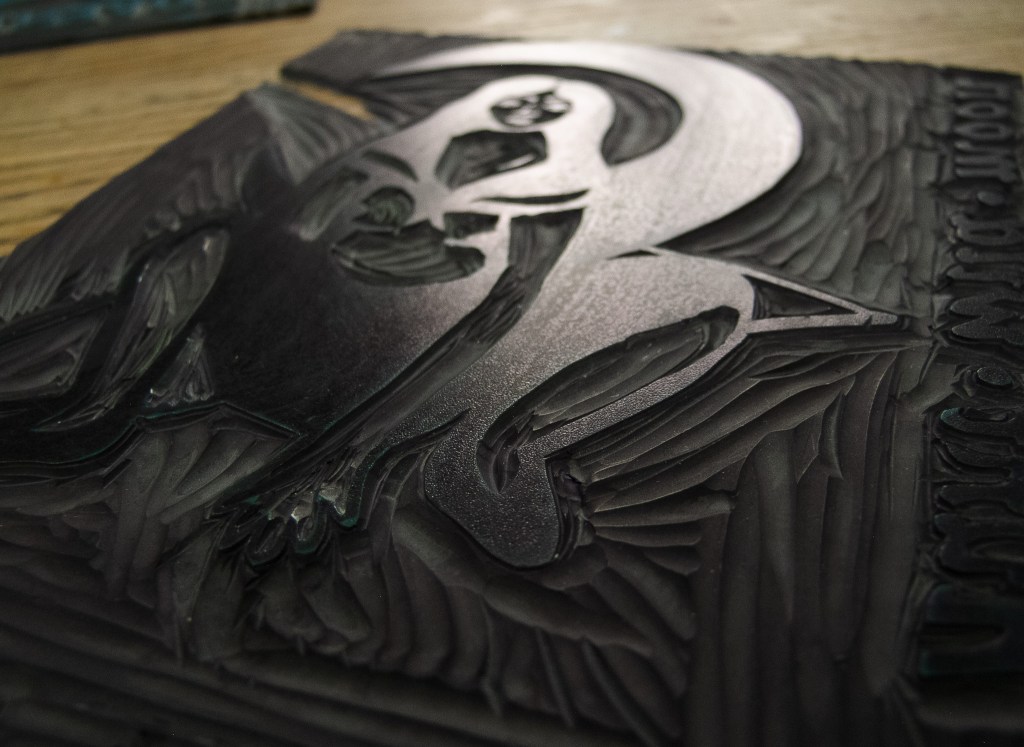
    Artemis Linocut print and greeting card

    Back with my goddess posts soon, bye!
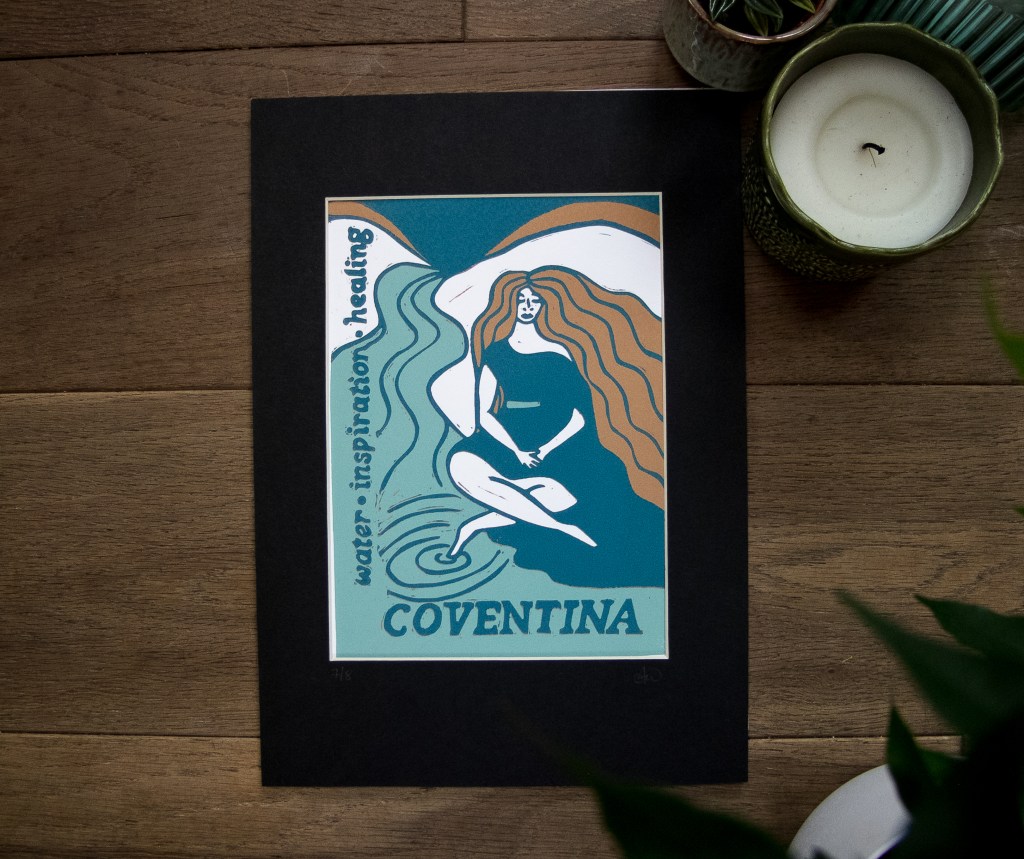
  • Coventina : The Forgotten Water Goddess of Hadrian’s Wall

    Dearest Coventina,

    Goddess of wells and springs. Queen of the river deities. First worshipped in Celtic Britain, when the belief in local water goddesses was strong. When people would bring gifts to the springs and wells to express their gratitude and to pray to the river goddesses for the clean, fresh life giving water to continue to flow.

    Once the Romans arrived in Britain, Coventina of the Wall continued to be worshipped and was given a high status. Her name often inscribed with the words Augusta or Sancta. At Carrawburgh in Northumberland she was given an altar at the well and many coins, vessels and other votives to her were found there.

    Attributes

    Her gifts are of abundance, inspiration and healing. She is often pictured as a water nymph figure lying down next to a spring, pouring water from a cup, with a large leaf next to her. Some artwork from the Roman era shows in triptique form, as a three aspect goddess. Sadly there are no stories of Coventina, no myths that have lasted through time, but she remains as a memory, an ancestral wisdom of the importance of our natural waterways in Britain.

    On a more personal note, Coventina is the Goddess that guides me on my artistic journey. She is reason The Coventina Press exists.

    If I ever feel stuck or lost, she arrives at my side. Her well is a lost place now, hidden in a field of reeds. No sign everyone worshipped her so deeply. But if you make the pilgrimage to her home in the summer months you may be lucky enough to see her presence, to feel her in the yellow flowers that guide you to the once sacred place, to sit in that wilderness and watch the trickle of beautiful clean water still coming from the ground. She is still there, and we still have so much to thank her for.

    The limited edition Coventina Blue hand printed linocut is available to buy here and as a greeting card here. The Coventina Black hand printed linocut is available to buy here and as a greeting card here

  • Greek Goddess of Harvest, Agriculture and the Seasons

    Dearest Demeter. One of the Twelve Olympians. She is a very important Greek Goddess and there are many myths that surround her. She is the goddess of grain, agriculture and harvest and the fertility of the Earth, but it is as her role as a maternal goddess that we learn the most. The Myth of Demeter and Persephone is a well known tale of a Mothers grief and is also a creation myth of the seasons.

    The Story of Demeter

    Demeter was the third born child of Kronos and saw swallowed by her Father and saved by the youngest son, Zeus. She became the Goddess of Agriculture and taught humans how to harvest and look after the land and learn agricultural skills to never go hungry. She was a kind, maternal, nurturing goddess who loved humankind.

    Demeter had a daughter with her brother Zeus, named Persephone and they were extremely close. Persephone was the Goddess of Springtime and was worshiped alongside her mother as an agricultural goddess. One day she out collecting flowers in the meadows when she disappeared. Demeter searched the world for her and could not find her anywhere. She was completely distraught and the world around her became to die. Demeter has stopped caring for the outside world and in her sorrow the plants, the harvest began to suffer. Unbeknownst to Demeter, the other Gods knew where Persephone was. Hades, God of the underworld had asked Zeus for Persephone had in marriage and Zeus had agreed. Eventually Helios and Hecate took pity on Demeter and told her what Zeus had done. She was aghast and the world around feel into a deep cold winter.

    Zeus, began to fear for the human race and asked Demeter to stop her affect on the land but Demeter refused and told Zeus if he did not return her daughter, the cold famine would continue. Zeus had no choice but to try and get Persephone back! Hades relented for the sake of humankind and Persephone was released from the Underworld. However before she left, Hades give her a gift of a pomegranate. Now it was common knowledge that if you eat whilst in the land of the dead you could not leave. The question of whether Persephone knew this and choose to eat a third of the pomegranate or whether it was a trick will never be answered. Persephone returned to the land of the living but as she had eaten a third of the pomegranate she had to leave for a third of the year and this is where we get the cycle of the seasons. The cycle of grief and acceptance, of happiness and sorrow.

    Winter alone Demeter lets the world around her die. Spring arrives with hope and Persephone once again walks the earth beside her mother and the world blooms. Eventually the time of her return to the land of the dead approaches and as Demeter begins to grieve the leaves fall from the trees until Persephone once more as gone to back to Hades. I choose to believe Persephone knew what she was doing and wanted both worlds. Her mother and her new home independent of her.

    Demeter and Persephone

    This myth was an important one for the women of ancient Greece as they often had no choice on their daughters husband and would have understood Demeter grief and her rage.

    Demeter is a loving, caring nurturing goddess.She is generous, helpful and you feel the warmth of her emotional and physical support whenever you need it. Her maternal persistence will make her stand up for her child regardless of the consequences, and her perseverance can change the mind of even the most powerful man.

    One last point to make, is that Demeter lived for and through her Daughter. Another way to look at this myth is through a lens of ‘leaving the nest’ What if Persephone wanted to leave? and Demeter through her own grief could not imagine her life without her daughter and therefore left no space for her daughter to grow. Persephone may have wanted to marry and travel to the underworld and live her own life. Sadly in the end she had no choice but to divide her life in two instead of sharing her life with both her mother and her husband. This is of course a different take on the same myth and either could be true.

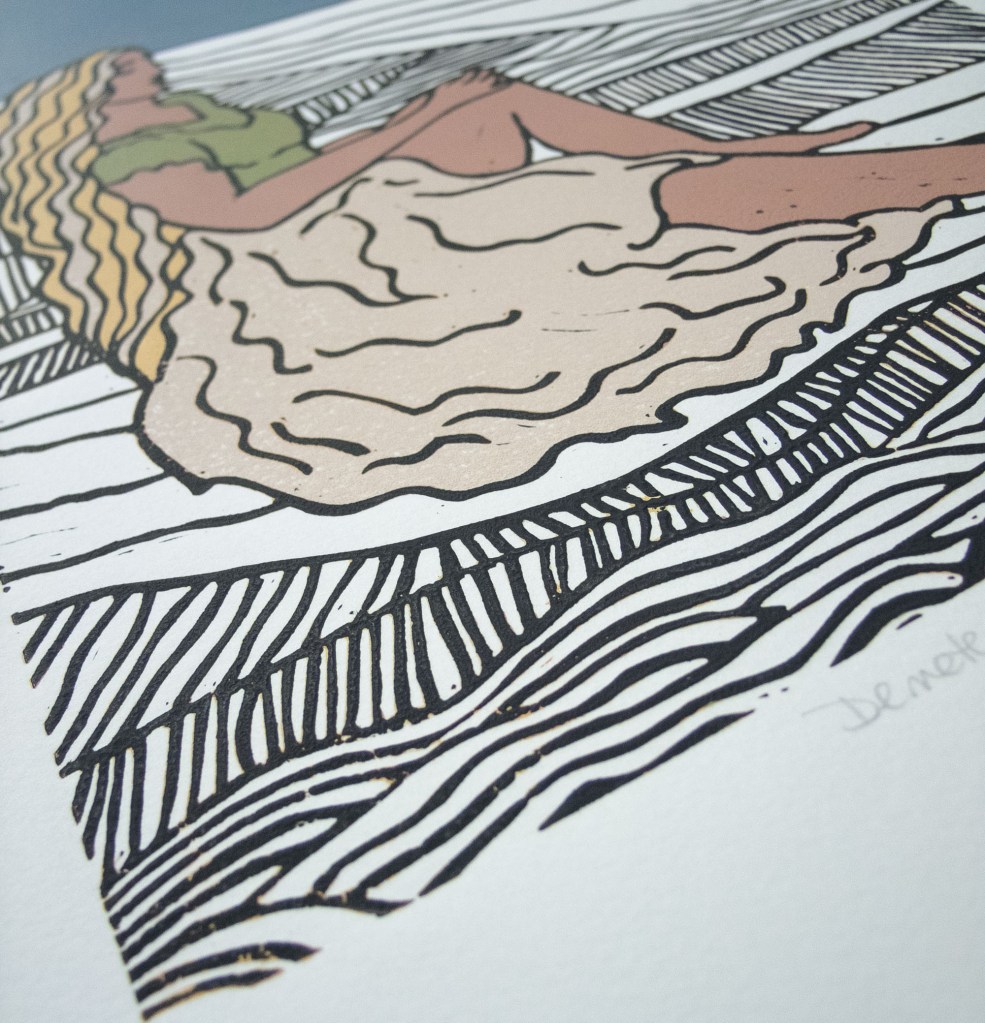
    For more Goddess posts please check out the Directory, I’m working hard on it. I now have an information post for most of my linocut prints. You can shop for my hand printed Demeter linocuts here, greeting cards here.

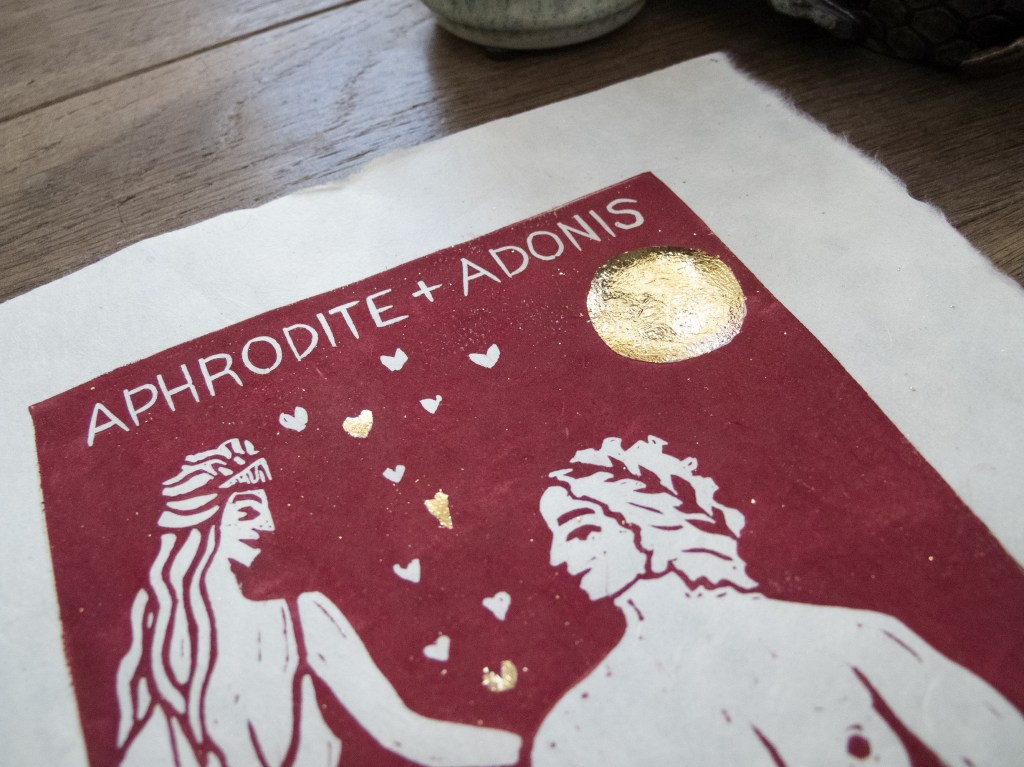
  • The Story of Aphrodite and Adonis

    This is quite the story so buckle up and it all starts with a King forgetting to give a sacrifice to Aphrodite. In her anger, the goddess of love and sexual desire. made his daughter, Myrrh desperately wanted to sleep with her own father, the King. The King did his best to stop her advances but in the dark one night she deceived him and they had sex. The King was devastated by this and in his rage he chased his daughter into the woods with an sword! Aphrodite, not wanting Myrrh to actually die from her tricks, swiftly turned her into a tree. A Myrrh tree. The King split the tree in two and from the split was born baby Adonis. I don’t quite know what to say regarding this tale, it’s such a strange and cruel story. I’m going to do a blog post on Aphrodite soon, and talk a bit about her other facets, not just vengeance. But let’s continue for now..

    Aphrodite rescued the baby and as there was no one else to look after him she took him under her wing. However, the baby was so adorable that Aphrodite forgot everything else, she began to neglect her Goddess duties. Eventually she realised that she had to give him to someone else to look after. Persephone took the child and kept him in the underworld.

    Once he had grown in to a beautiful young man, Aphrodite returned and feel instantly in love with the youth. Of course Persephone had also fallen in love with Adonis and refused to let him go. Aphrodite and Persephone got in a terrible argument over him and Zeus himself had to intervene.

    Now this is where the myth splits in to multiple different endings, as is often the case with ancient Greek myths. The first version is that Zeus decided to split Adonis time in three. 4 months for Aphrodite, 4 months for Persephone and 4 months for him to decide himself. A 2nd version says that that they split his time in half and in a final version, Adonis actually gets to choose for himself and choose Aphrodite.

    Adonis grew into a beautiful man, who loves to hunt. The God Ares who was also a lover of Aphrodite was jealous of their love and when Aphrodite was away turned himself in to wild boar and hunted him down. Adonis died in Aphrodite’s arm and as his blood mingled with her tears beautiful anemone flowers sprung up out of the ground. Persephone was delighted as she now had Adonis all to herself in the underworld. Aphrodite mourned his passing every year in a festival called Adonia.

    Quite the story. Artworks available over at The Coventina Press. Original Linocut and Greeting card.

  • Oh veiled one, Queen of Winter, cold and wind. The Divine Hag of the Celtic world.

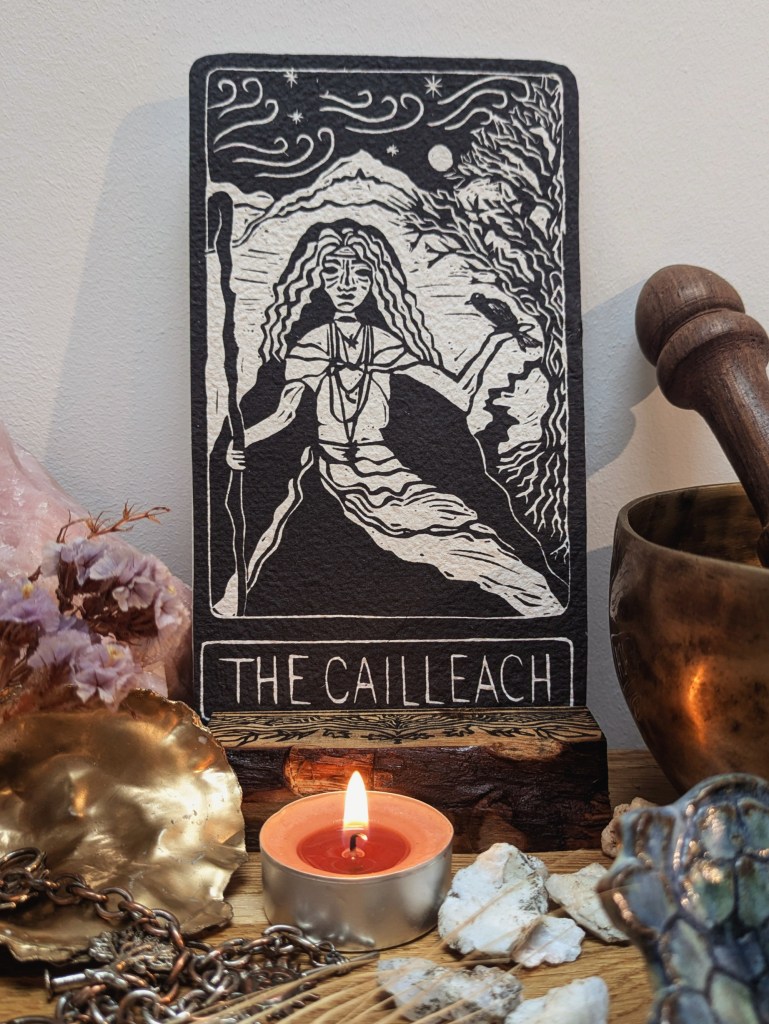
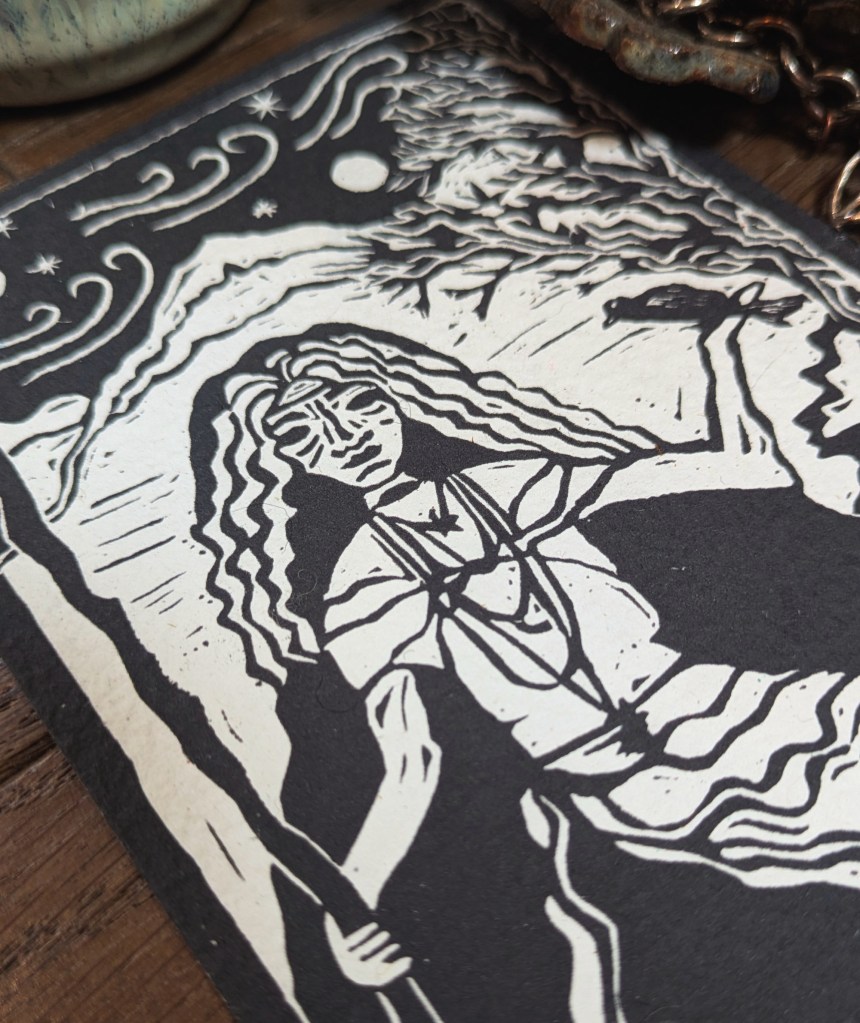
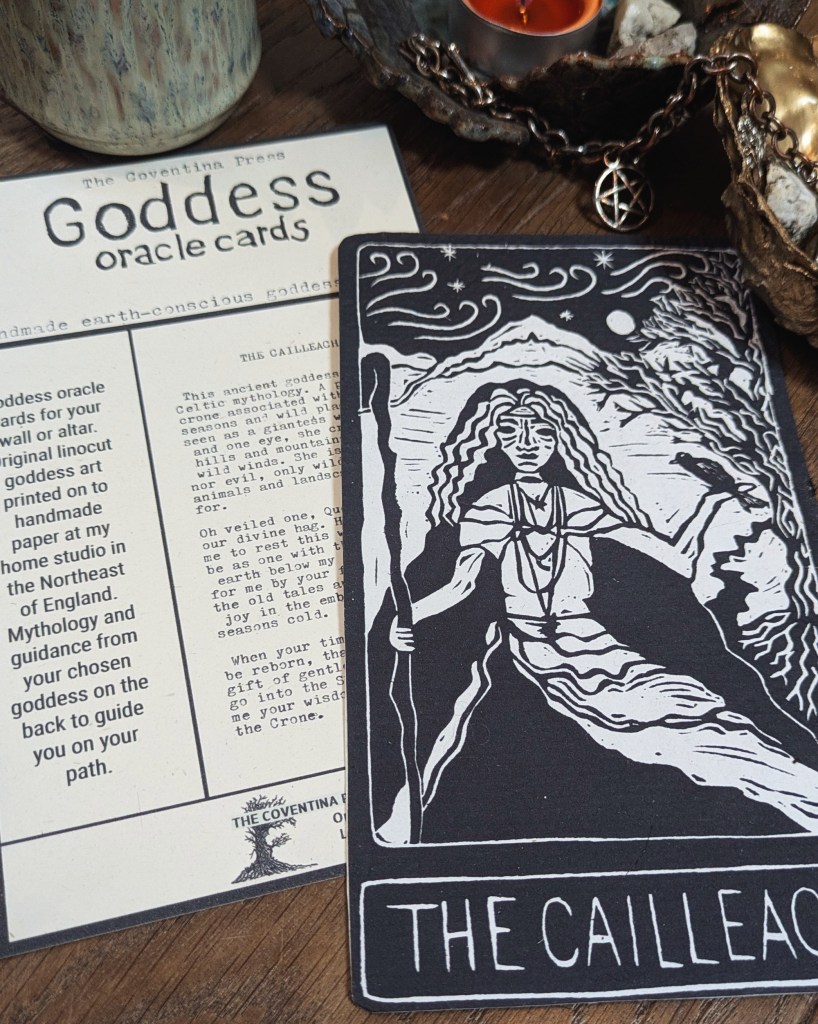
    The Cailleach, translates from Gaelic as ‘old woman’ or ‘hag’. She is most often portrayed as an elderly woman with a veil, sometimes with only one eye. Her skin was deathly pale and her teeth were often red and she wore clothes adorned with skulls. As old and frail as she appears she could leap and stride across the wild landscape and mountains, and in some traditions could shape-shift into a large bird and fly away. She was ambivalent in nature neither good nor evil. She would help or hinder depending on the respect given to her. As the mother of storms and the winter’s cold she has a wild and often destructive nature. She had a hammer with which is created the rugged landscape of the Celtic world.

    Tales of the Cailleach and Imbolc

    Perhaps the most famous folktale involving the Cailleach is that of Imbolc. On the !st of February each year, the old hag would run out of firewood. If she awoke early she would make sure the day was clear and bright to ensure she had plenty of time to collect enough firewood for the rest of winter. If she slept in, the weather would be stormy, and she wouldn’t have enough firewood to continue the winter. This story is where the belief that a 1st of February which is bright and sunny means winter is over and one which is stormy and grey mean another cold spell will arrive before spring. In america, the Cailleach has been completely forgotten and replaced with the Groundhog but the tradition has lasted just the same.

    Perhaps the most famous folktale involving the Cailleach is that of Imbolc. On the !st of February each year, the old hag would run out of firewood. If she awoke early she would make sure the day was clear and bright to ensure she had plenty of time to collect enough firewood for the rest of winter. If she slept in, the weather would be stormy, and she wouldn’t have enough firewood to continue the winter. This story is where the belief that a 1st of February which is bright and sunny means winter is over and one which is stormy and grey mean another cold spell will arrive before spring. In america, the Cailleach has been completely forgotten and replaced with the Groundhog but the tradition has lasted just the same.

    The Cailleach and Brigid

    The Cailleach is also associated strongly with the Goddess Brigid in that Brigid is the light and the Cailleach is the dark. The Cailleach fades in to Brigid at Beltane and Brigid fades in the Cailleach at Samhain. Winter and Summer doing there annual dance with each other.

    The Queen of Winter

    It is beautiful and refreshing to find ancient magical folklore where the ‘old hag’ isn’t some gruesome malevolent being intent on causing harm, but just apart of nature, of the winter months and the sleeping of the world, of storms and ice and cold. The hibernation of winter is just as important as the blossoming of spring and the abundance of summer and the queen winter should be admired and cared for, just as the Cailleach is in Perthshire every year.

    Artwork

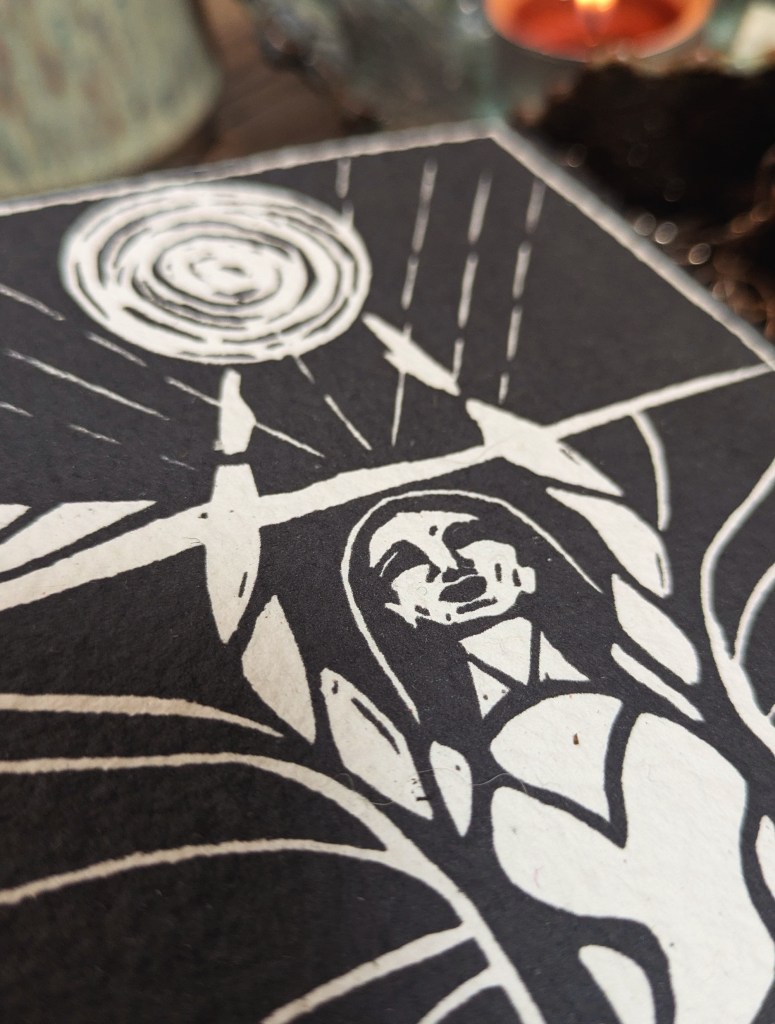
    Head over to The Coventina Press where you can find all my current goddess artwork, including The Cailleach Oracle card.

  • Morgana – enchantress, high priestess of Avalon

    Morgana Le Fay is an enchantress, fairy-queen and high priestess of Avalon from the Arthurian Legends. In the earliest myths, she was a benevolent goddess and wise healer who helped Arthur in his quests. In medieval times Morgan became the antagonist of the story, often depicted as Arthur’s half sister who tempted him and did everything in her power to push him off his path. In these versions she was a sorceress, a witch, a seductress. Whichever Morgan you see,  she will always be powerful, beautiful and extremely magical.

    Key characteristics from Arthurian stories

    She is extremely powerful, renown for her magical abilities, often using them to challenge Arthur and his knights. She is skilled in illusions, enchantments and potions. Her morality is often ambigious, she isn’t portrayed as purely evil but her motivations are complex and even when her actions come across as villainous. She often plays the role as Lover and Betrayer to Arthur, as the antagonist.

    The mists of avalon book takes a close look at Morgana and it is an interesting read from a female perspective.

    Artwork

    Morgana Square Linocut Print

    Morgana Oracle card

    Morgana Greeting card

    Miniature Morgana Print

    I think I might be a little bit obsessed with her…. but aren’t we all? Back with more goddesses soon, bye!