• The Moirai – Goddesses of fate

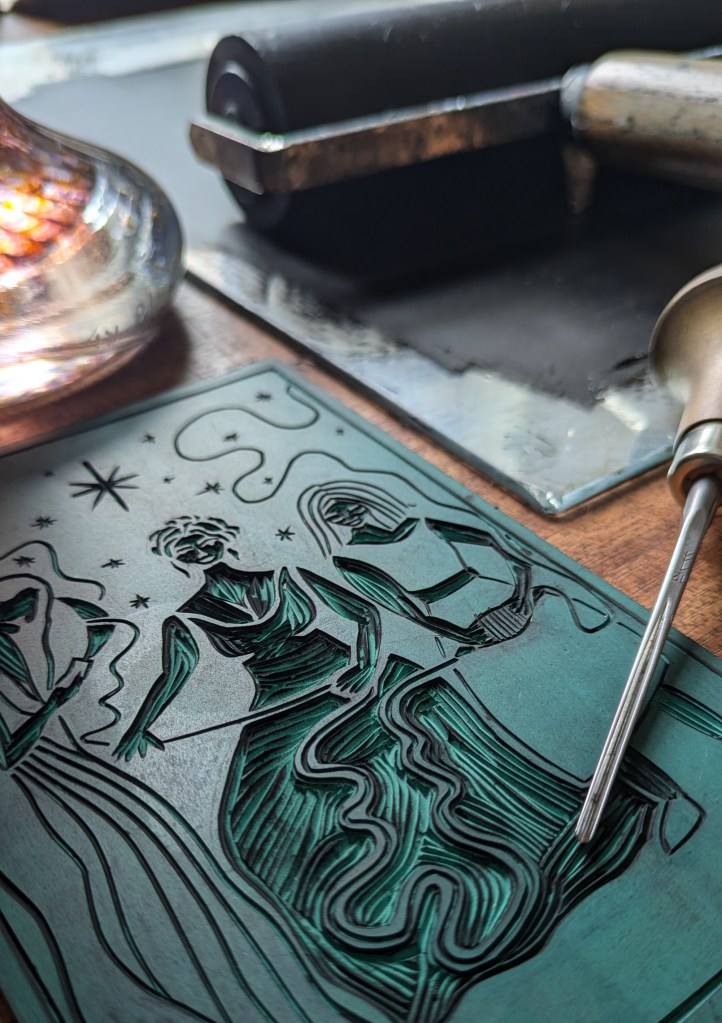
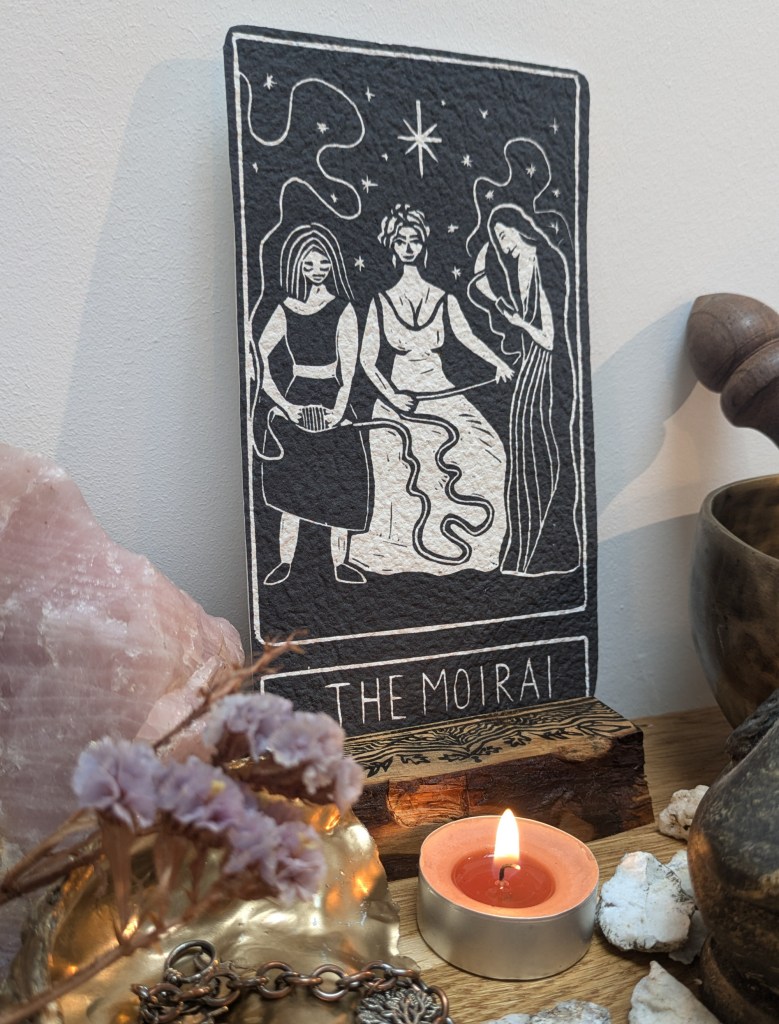
    The Moirai or The fates in Greek Mythology are three sister goddesses who wove the destinies of everyone on earth, mortal humans and gods alike. They were extraordinarily powerful even compared to the Olympians and were feared throughout ancient Greece. They stood on the edge of time and had a view of the entire universe. The three fates had individual characteristics and different roles. I’ll give a brief outline below but the Moirai are involved in so many of the Greek myths and intertwined in many stories that I couldn’t possibly write it all down here.
    Clotho

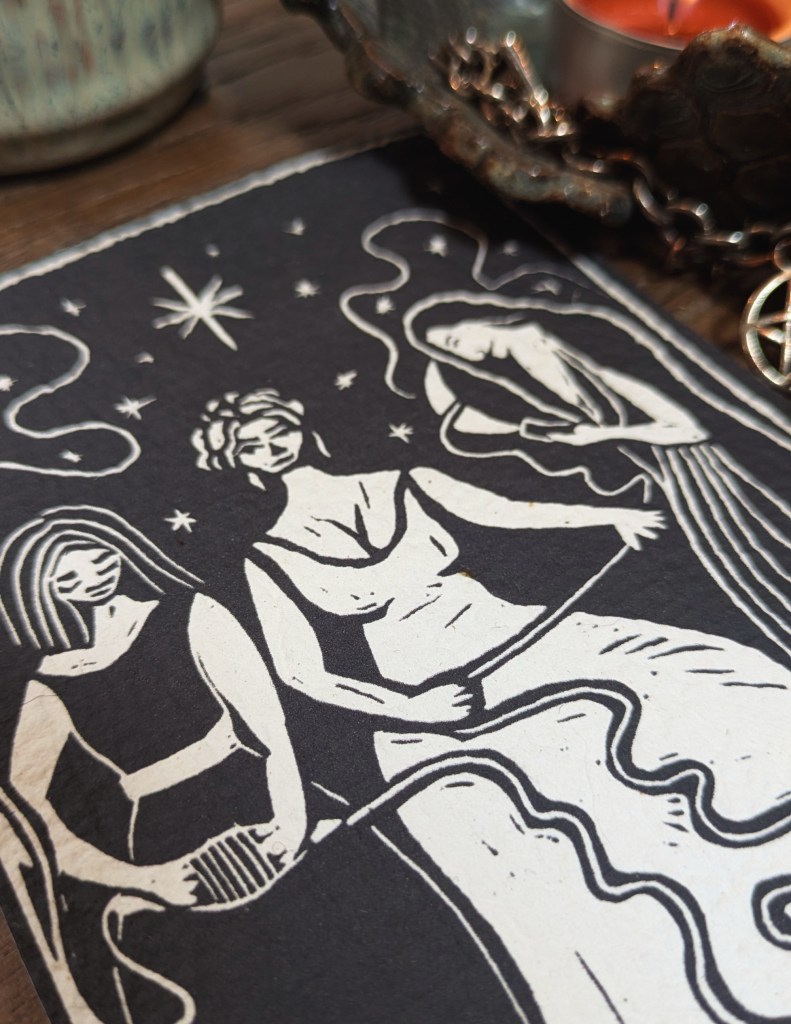
    Clotho was the youngest of the three sisters, I have depicted her as a maiden in keeping with the maiden, mother, crone archetype that is so popular with triple goddesses such as these. It was the responsibility of Clotho to spin the thread of the cosmos and to weave the individual threads of life in to the tapestry of the universe. She was known as the Spinner. It was Clotho, on a cosmic level that kept balance in the universe, weaving the threads of life together. She knows all things and arranges them in order.

    Lachesis

    Lachesis, the mother. Middle aged, wise and just. She was the measurer. It was she who would give you ‘your lot’ She would divide, apportion and assign the parts of our existence. Fortune, folly, good and evil, love and hate. The triumphs and the obstacles. She took the cosmic order from clotho and allocated it out on a human level. She then measured the thread of your soul and passed it on her sister when your time was up.

    Atropos

    Atropos the crone. The eldest and most feared of the sisters. Only to her could the most important role be given. Her duty was to cut the thread of life. The finality of death was in her hands. In some myths she is the one who decided when it was your time to go and in others she is simply the cutter, the ending already woven in to the tapestry by her sisters.

    Free Will and the Fates

    Although it would be easy to believe having read the above that no-one has any free will. That all has already been decided, predestined the moment you were born, it was more likely that the Greeks did believe in free will. The fates rather than controlling your destiny, simply knew your destiny. They knew every decision you would eventually make and how the life you were given would play out. and regardless of what power the fates had over your life, you were still judged on the way you lived it.

    The ancient Greeks believed in judgement after death. You would be judged on how you lived the life you were given, did you overcome the struggles with honour? did you live humbly with your good fortunes? All of this speaks of free will, and that life is truly what you make of it and not what the Moirai gave you to begin with.

    My Moirai Oracle cards are available in the shop, links below!

    Oracle card

  • Goddess Anahit of Armenia

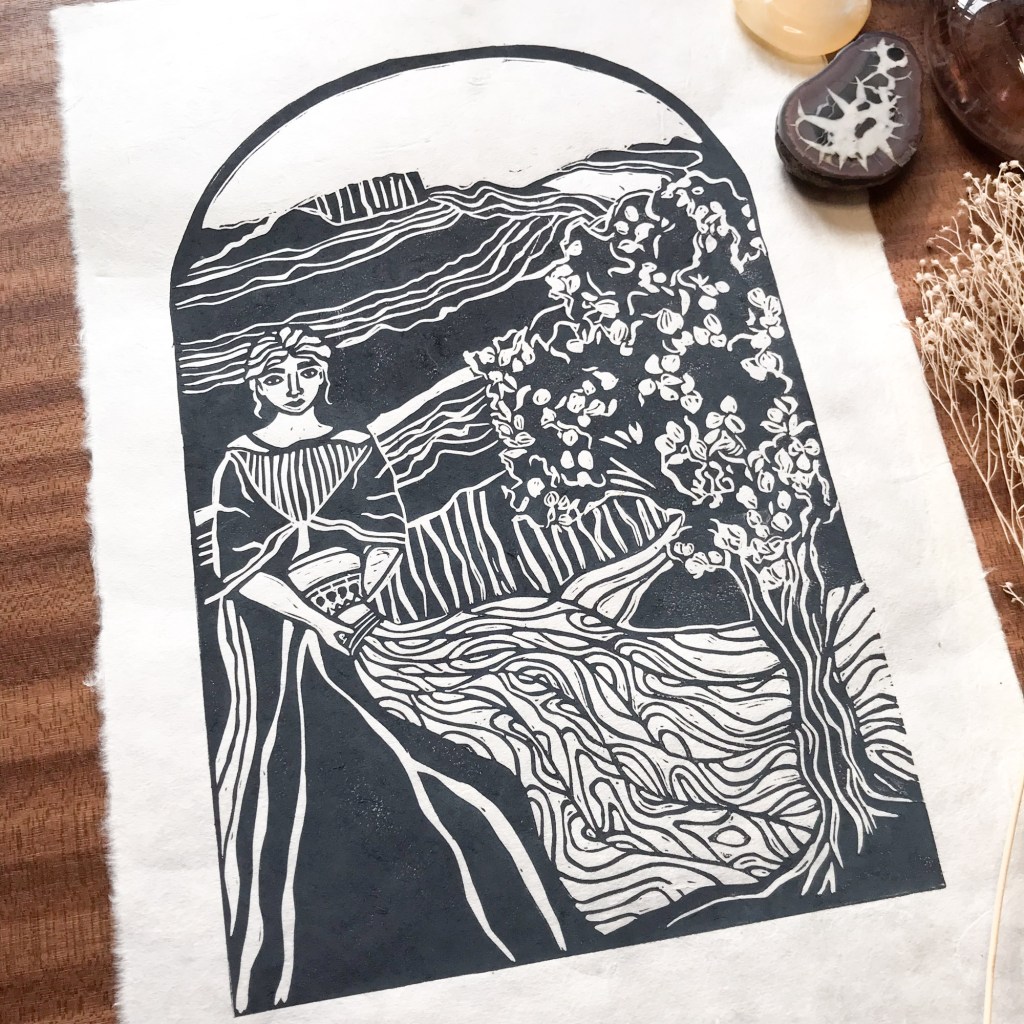
    My Goddess Anahit print was a lovely commission I received last year and I have to admit, I had never heard of her. As I was researching I found that there was very little detailed information about her on the internet in English. Every website I found repeated the same phrases over and over, except for one.

    I did find a wonderful website dedicated to Armenian goddesses called flaming of the rose and I would highly recommend visiting it if you are interested in the history of Armenian Mythology and their beautiful goddesses as she describes Anahit much better than I have below.

    The making of Anahit

    Goddess Anahit of Armenia arose in part from earlier goddesses of the ancient tribes of Armenia and also from the Zoroastrianism of Persia. She is similar but distinct from Goddess Anahita of Persia. She is a syncretism of the many goddesses that came before.

    Associations

    She is a Mother Goddess, a goddess of fertility, healing and wisdom. She has strong associations with marriage and childbirth and is also associated with the heavenly waters and purity. She became one of the most venerated deities in the region and is still beloved by her people.

    Temples were built in her honour throughout Armenia and she was worshiped and loved even after the conversion to Christianity by King Trdat.

    Worship

    There are few remnants of the worship of Anahit, most temples and statues to her were destroyed. The head of one such statue is in the possession of the British Museum and although it is so far the only one recovered, they refuse to give her back to Armenia, which saddens me greatly.

    Modern Day

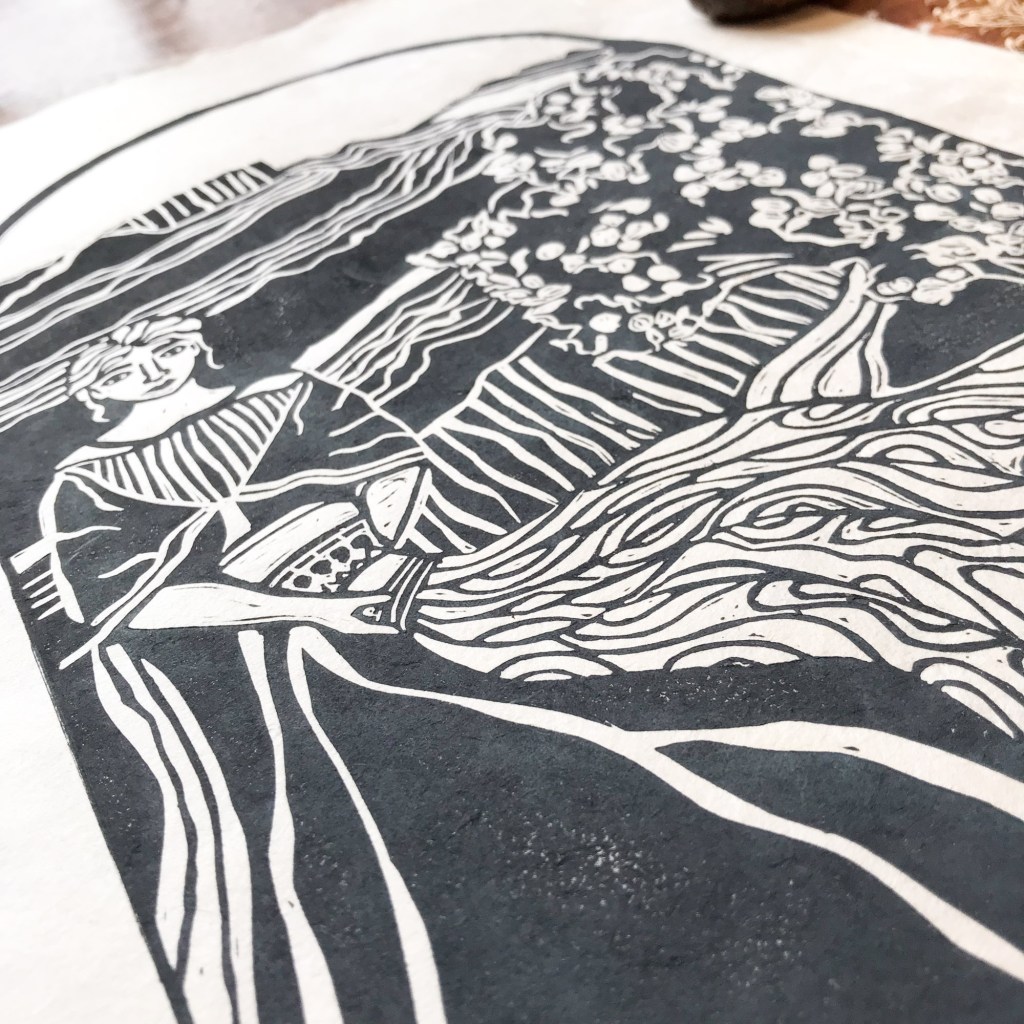
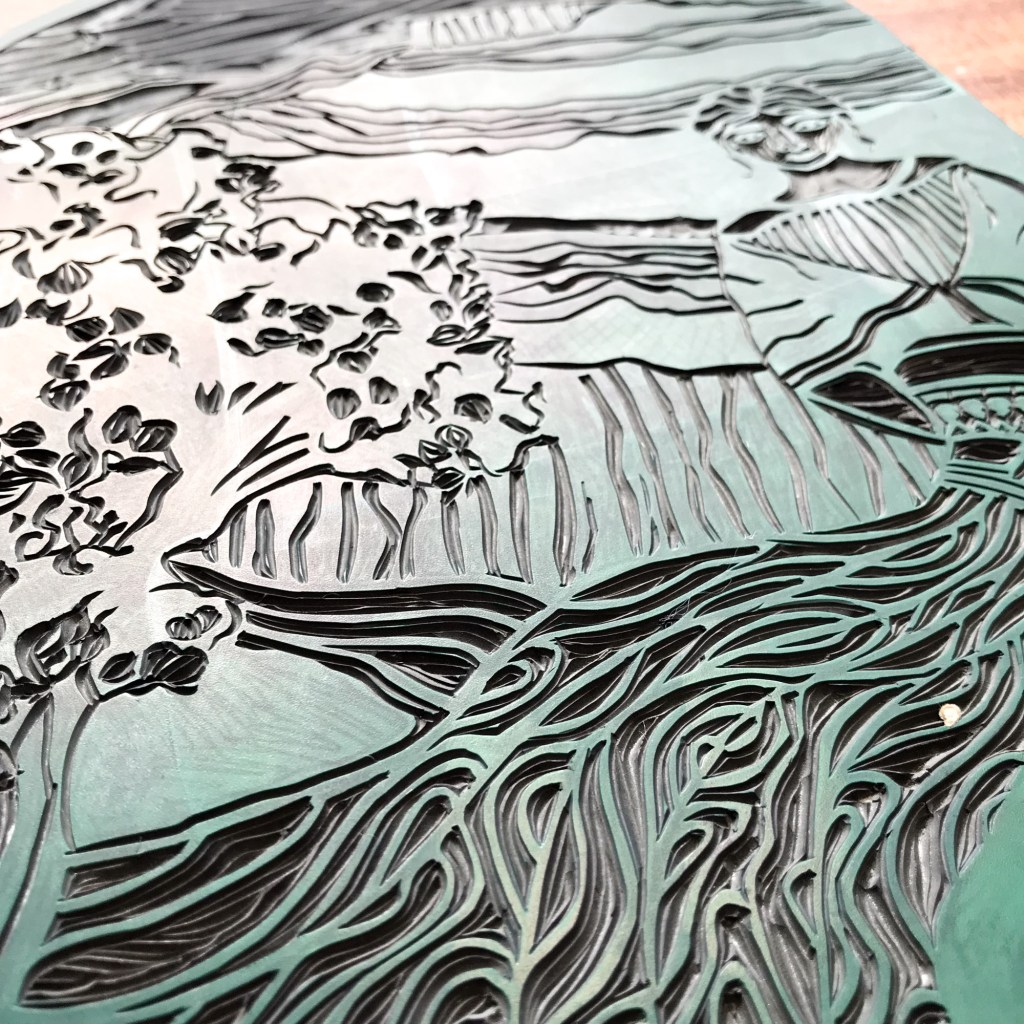
    Anahit is a symbol of Armenia, she is on banknotes, stamps and coins. She is recognised by her people as their emblem and their love for her is still strong. It was an honour to get to know her whilst researching this linocut print and a difficult one for me as she is shrouded in mystery. I hope I did her justice.

    The Goddess Anahit art by The Coventina Press is available here

    Linocut print

    Greeting card

    Hope you enjoyed this post, back soon with another Goddess print x

  • The Grindylow – Jenny Greenteeth

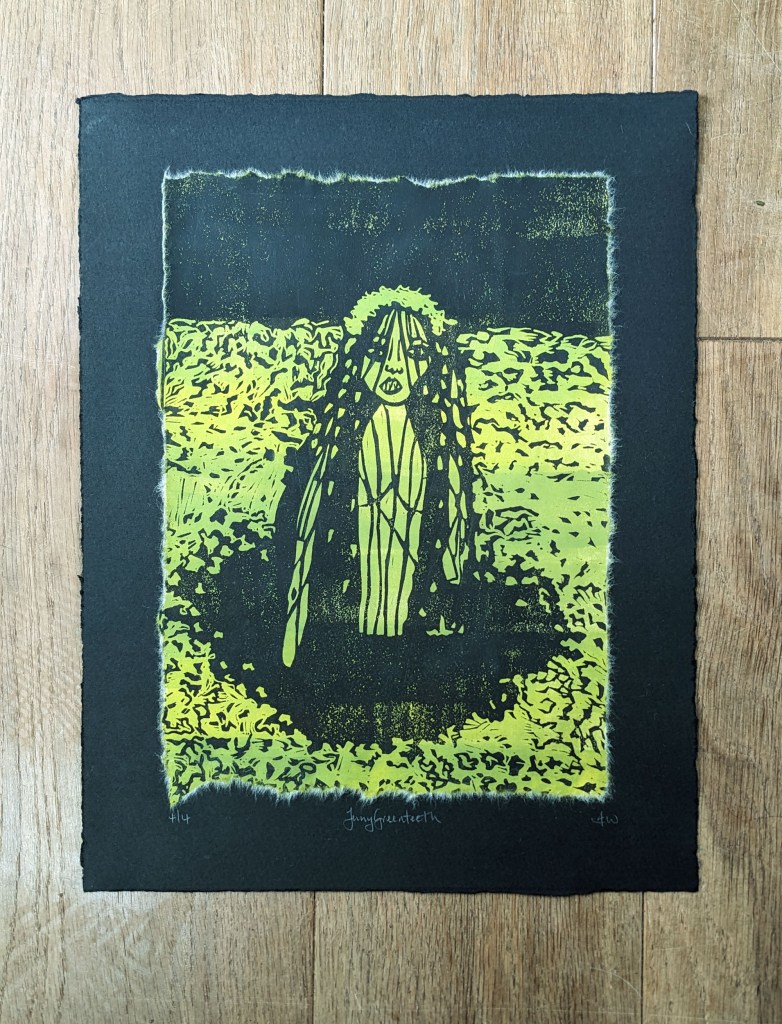
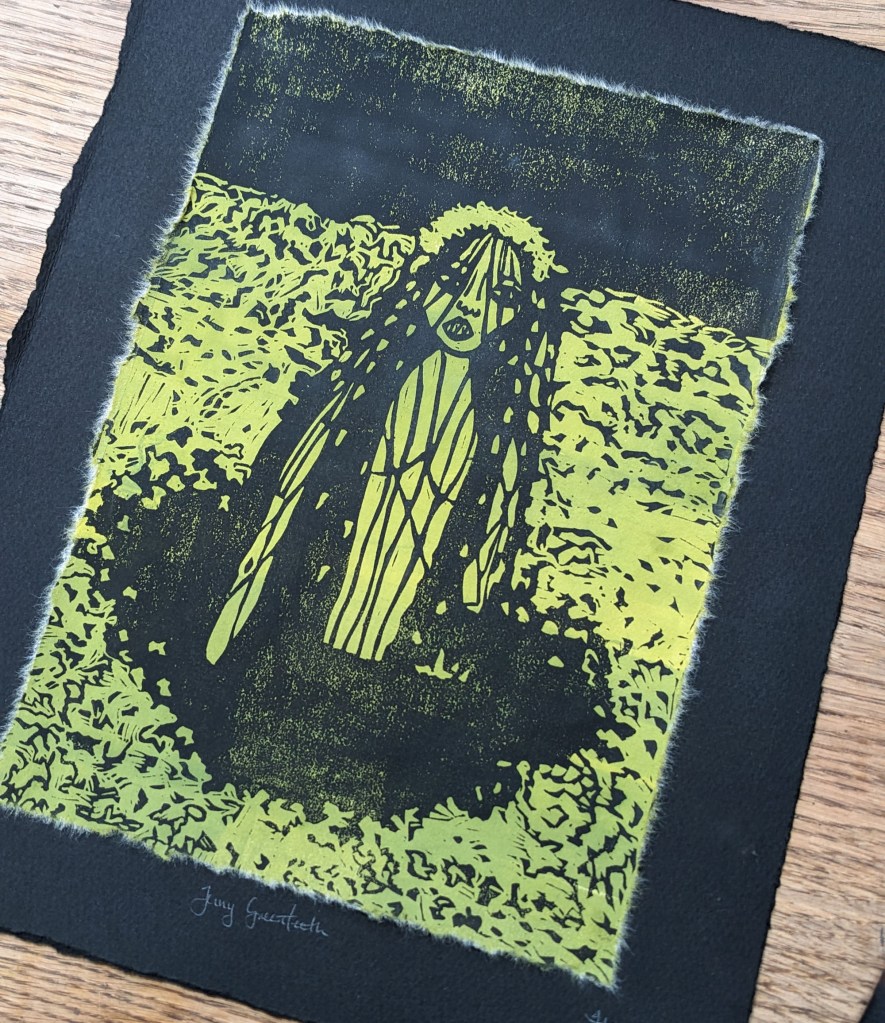
    Jenny Greenteeth is an English fairy or bogey who dwells in ponds and lakes covered in duckweed. She waits lurking beneath the water for unexpected children to pass close by and pulls them down to her lair. 

    The Grindylow is a type of water spirit from British folklore. They dwell in marshes, bogs and rivers. Some believe the Grindylow is a descendant of Grendal of the Beowulf epic poem. They are most well known in the northern regions of Britain, which adds weight to the idea it is a creature of Scandinavian origin, and can go by many names, Jenny Greenteeth is just one type of Grindylow.

    Children were warned away from the water by their parents, using the Grindylow as a sort of bogeyman. The Grindylow seems to have a penchant for pulling small children under the water to drown them. Now whether the Grindylow stories appeared just to scare the children away from the bogs, as of course, bogs are extremely dangerous, or if the Grindylow stories appeared first we just don’t know.

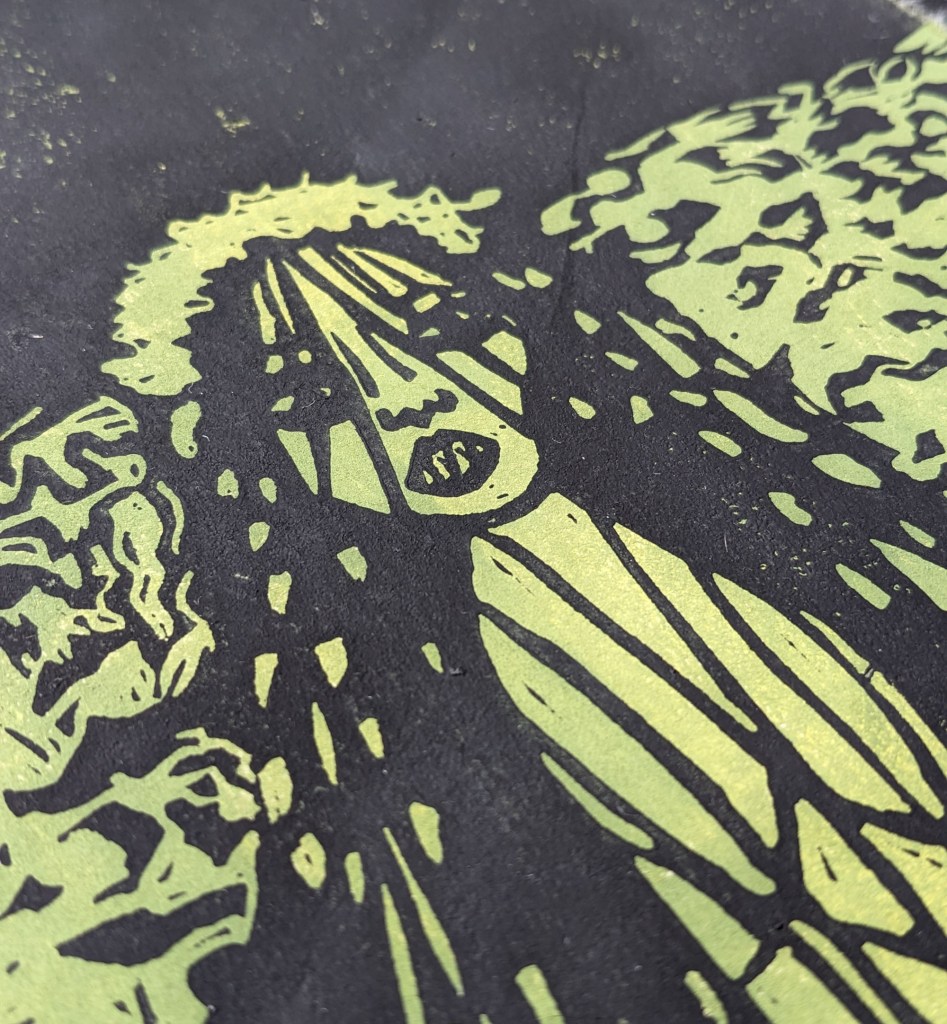
    Grindylows are often described as having green skin, sharp teeth and slimy skin. They have a small humanoid appearance, somewhat like a mermaid but without the tail.

    Grindylows have made a comeback in popular culture as they appear in the Harry Potter series.

    The Jenny Greenteeth hand printed linocut is available to buy here.

    Back with more Goddeses soon , bye!

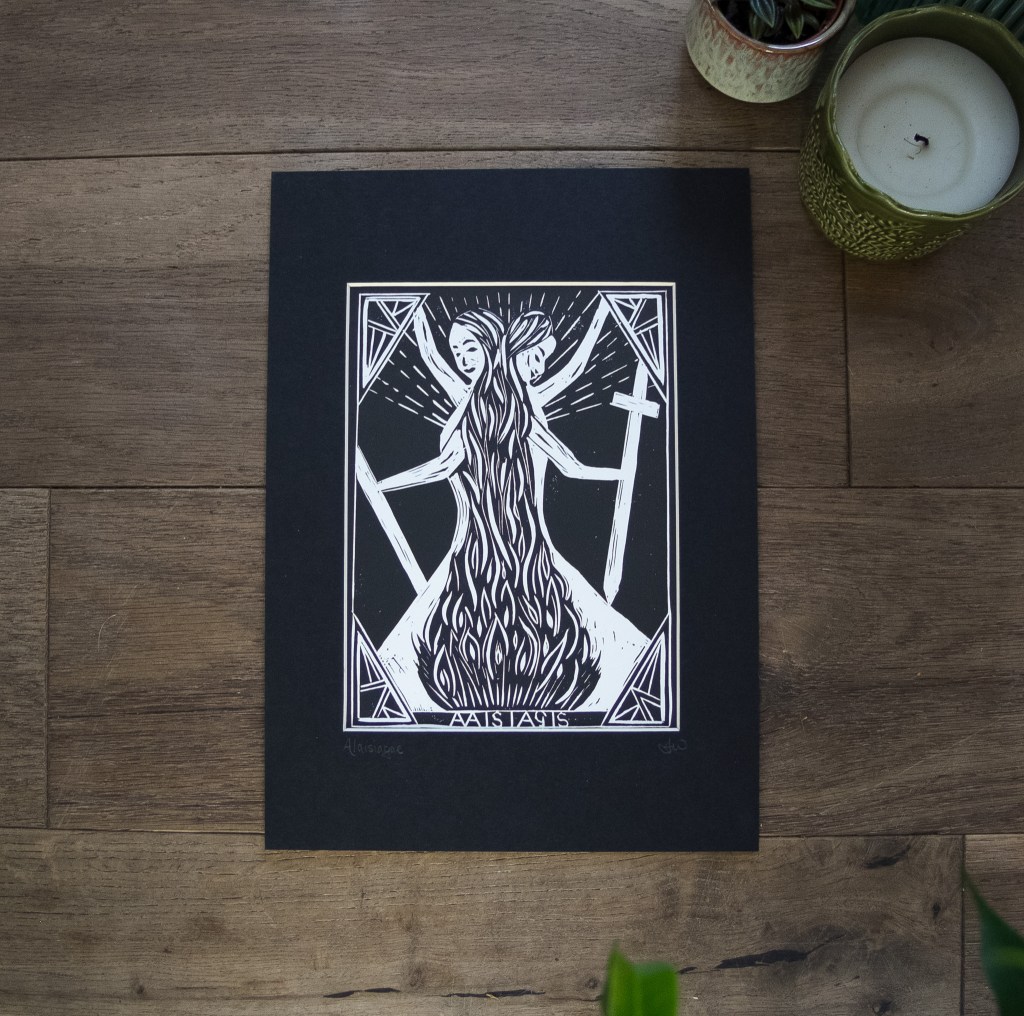
  • The Alaisiagae – Mysterious warrior goddesses of the Wall.

    The Alaisiagae were Celtic/Germanic war goddesses similar to the Valkyries of the Norse. They were worshiped in the North of England with votives found at Housesteads on Hadrian’s Wall. These enigmatic deities are shrouded in mystery, but there presence offers us a glimpse into the complex religious landscape of those stationed at the wall.

    The most common names associated with the Alaisiagae are Beda and Baudihille, though variations like Fimmilena and Friagabis also appear. These names, likely of Germanic origins indicate the fusion of cultures in the Roman army, especially at the frontiers. They also suggest a connection to the Valkyries of Norse Mythology, which is how I connect with them. It is this connection that makes scholars think they were deities of war, victory or fate.

    You can find altars dedicated to the alaisiagae at Housesteads. These were likely erected by Roman soldiers seeking divine favour, solace and the strength needed to withstand the harsh and uncertain life on the wall.

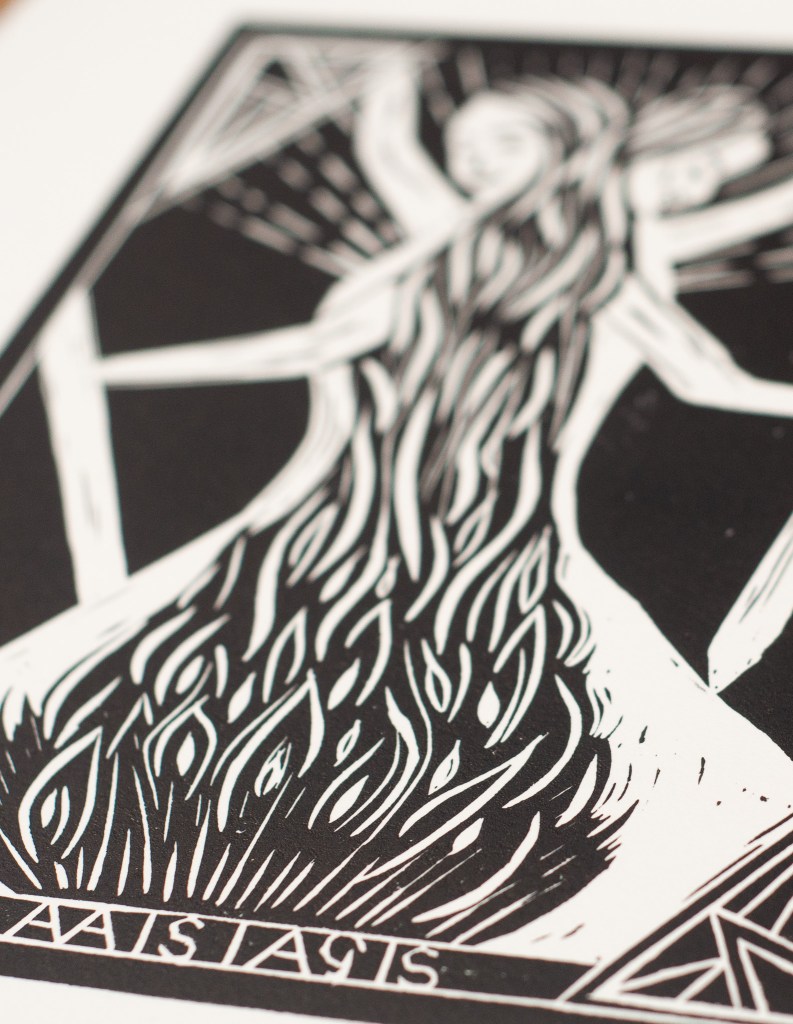
    This linocut above is my own based on my research of them as very little is known of the Alaisiagae but this is how I imagine them, two warrior goddesses, powerful and strong.

    The Alaisiagae design is in The Coventina Press shop. Links below

    Linocut Print

    Greeting card.

    I hope you enjoyed this round up and if you know anything else about these mysterious goddesses, do get in touch, I’d love to know more!